Category Archive for Nightcrawling
Amsterdam’s Weirdest, Strangest Museums! KattenKabinet cat museum, Dutch cocktail making & tasting tours.
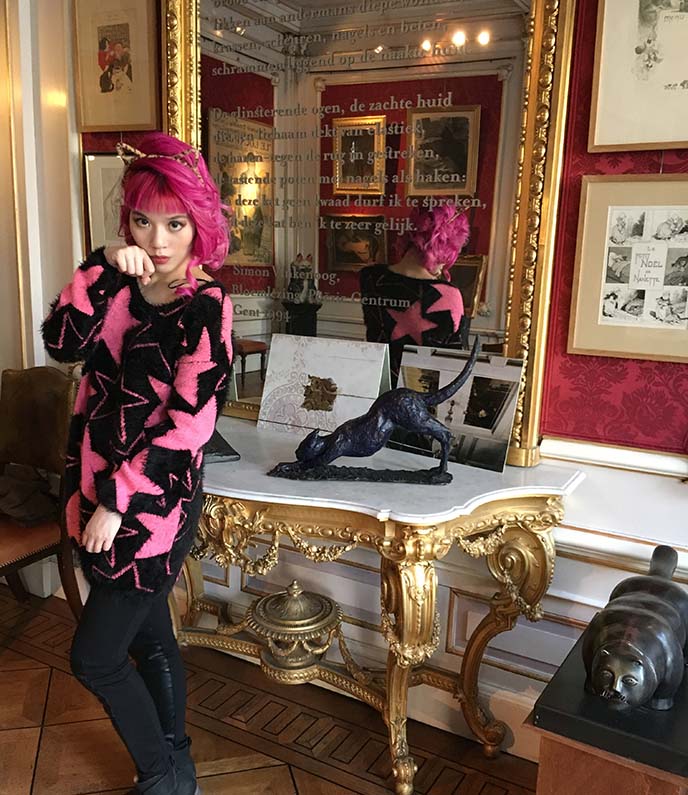
Meow from Amsterdam! Welcome to my adventures in the Dutch capital.
One glance at my blog, and you know that I love all things bizarre, unusual and quirky.
To my delight, Amsterdam has museums that veer gloriously into this territory… including a cat-themed museum, Katten Kabinet!

As a cocktail-lover, I also adored the creative, interactive tours at The House of Bols and Wynand Fockink. My friends and I got to taste Dutch spirits, and mix our own cocktails.
Ready to explore Amsterdam with me? Read on for a prowl inside the cat museum, and then we’ll get tipsy.

I teamed up with I Amsterdam, and they put together an itinerary that was tailored to my offbeat interests. (How do you like my flying outfit?)
I had a smooth direct flight from Vancouver to Schiphol Airport on KLM, the Dutch blue airlines known for its comfortable service. They’re one of my personal favorites, and even sell a Miffy bunny toy dressed in a flight attendant uniform.
● Outfit Details ● I’m wearing MySwear customized Hoxton creepers from Farfetch, which I designed to be shiny pink with an LC monogram. I’m towing this pink Samsonite suitcase, and you can see more photos of my faux fur coat here.
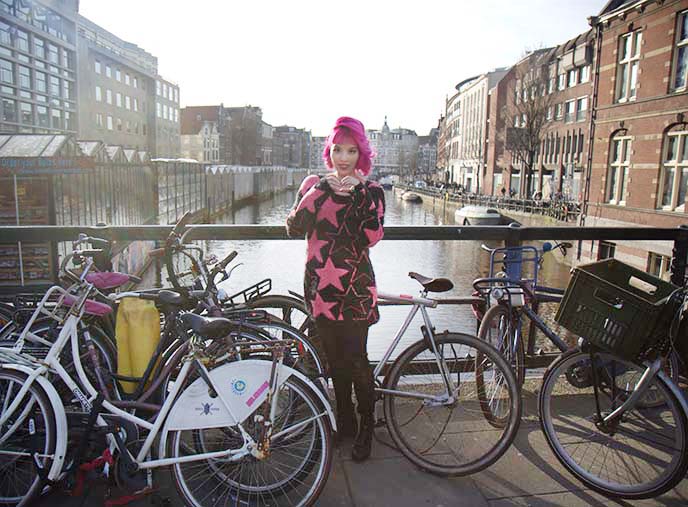
Before long, I was strolling through Amsterdam, a city known for its iconic bicycles and canals. Spring-time is also a great time to visit, as the weather is warming up but the tourists have yet to arrive.
● I’m wearing a sweater that belonged to my friend Rose — but you can find a similar star sweater by Wildfox (also sold in white), and a pink knit top with stars by Acne. Check out more below:

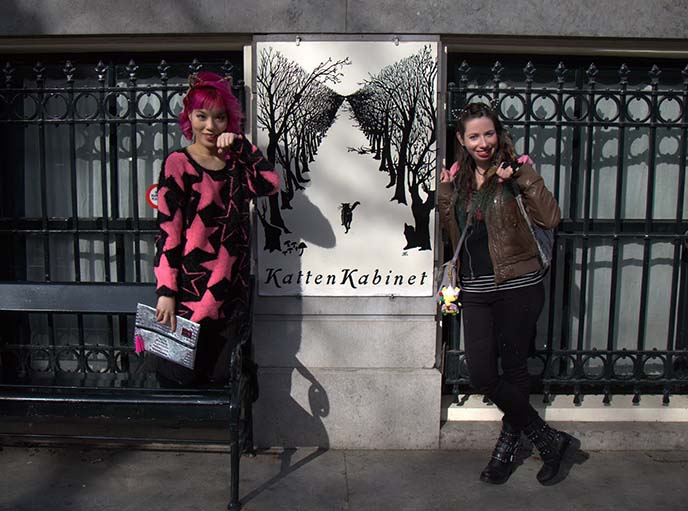
I reunited with my local friend Leyla, who runs LeylaFashion blog. (Remember when we visited the Miffy museum in Utrecht together?) Together with photographer Arina Dresviannikova, we were ready for an epic girls trip.
The fun started at KattenKabinet, a cat-themed museum. My friends and I donned pointy-eared headbands, and walked over to the centrally-located building that looks over the canals. (Address: Herengracht 497, 1017 BT, Amsterdam, Netherlands).
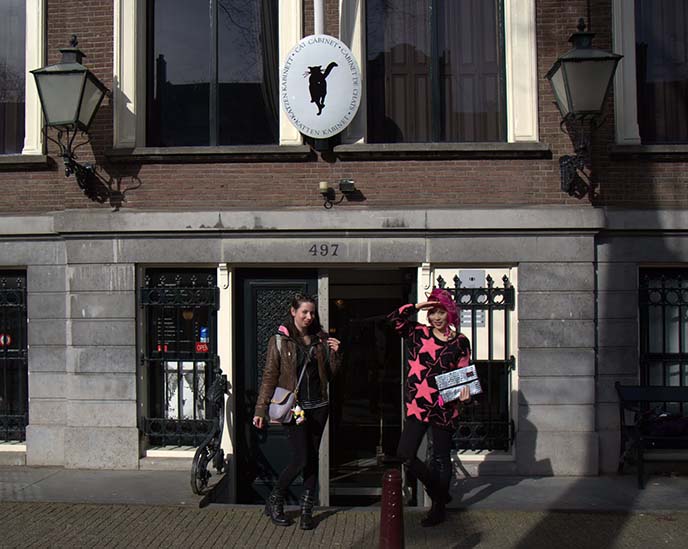
The black kitty sign beckoned us to enter.
(Watch Leyla’s travel vlog about Katten Kabinet to see us exploring).
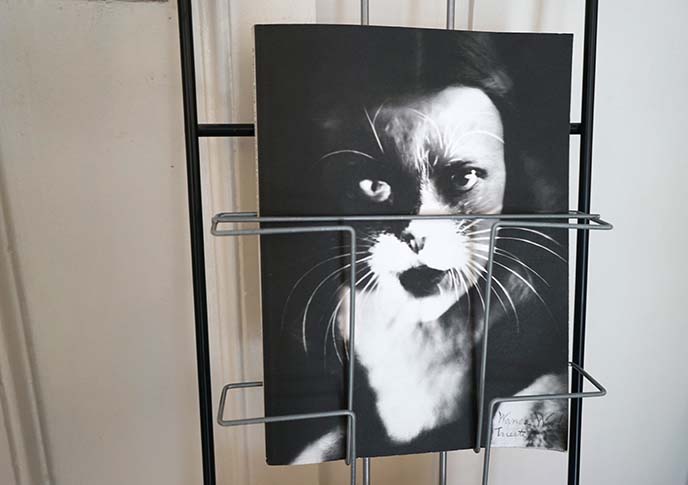
Most tourists stick to the popular attractions (Anne Frank House, Rijksmuseum), but I was keen to get off the beaten path, and discover a lesser-known collection — featuring nothing but cats.
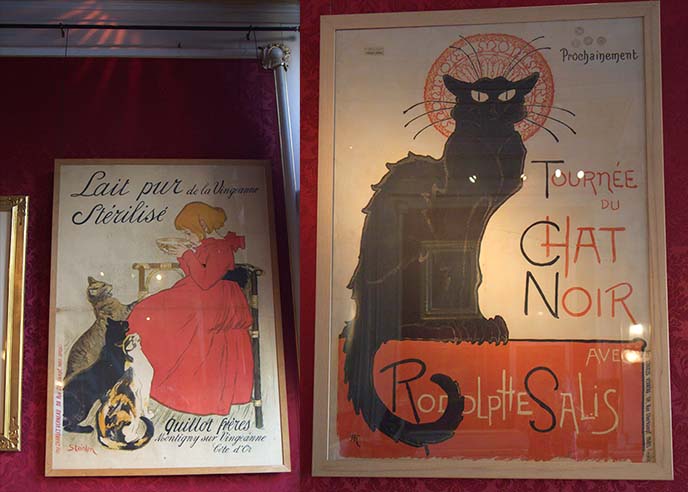
The museum is small (two floors) but the cat artwork is beautifully presented, with original pieces by masters including Pablo Picasso, Rembrandt, and Henri de Toulouse-Lautrec.
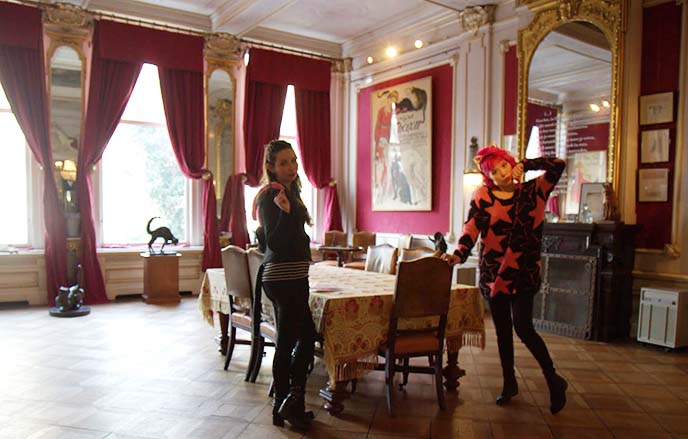
We went up a winding staircase, and found ourselves in this Baroque-style room finished in red and gold.
This collection of cat-themed objects is not at all kitschy or tacky. The works are masterpieces, carefully chosen and arranged in royal style.
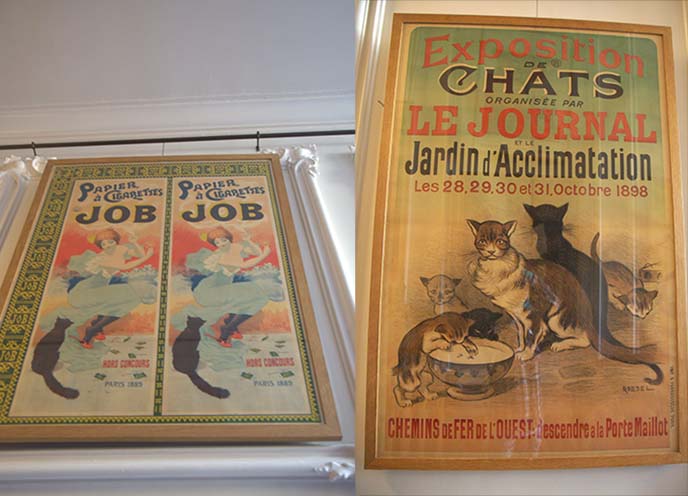
KattenKabinet was founded in 1990 by Bob Meijer, in memory of his red tomcat John Pierpont Morgan (named after the American banker J. P. Morgan). To this day, Meijer and his family live in the upper floors of this house.
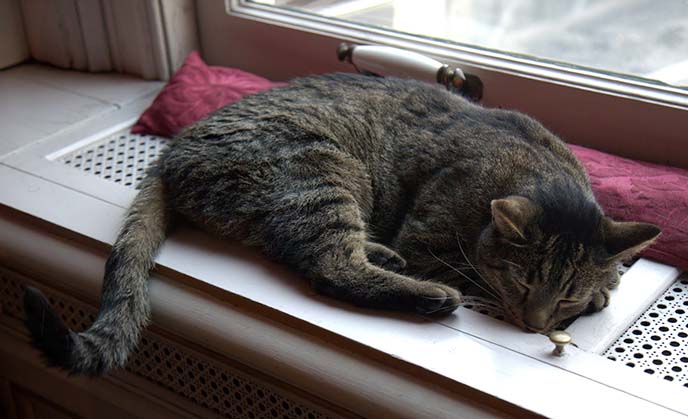
Several of his cats roam freely through the rooms. At first, we weren’t sure if this lazy fellow was real, or a stuffed kittycat!
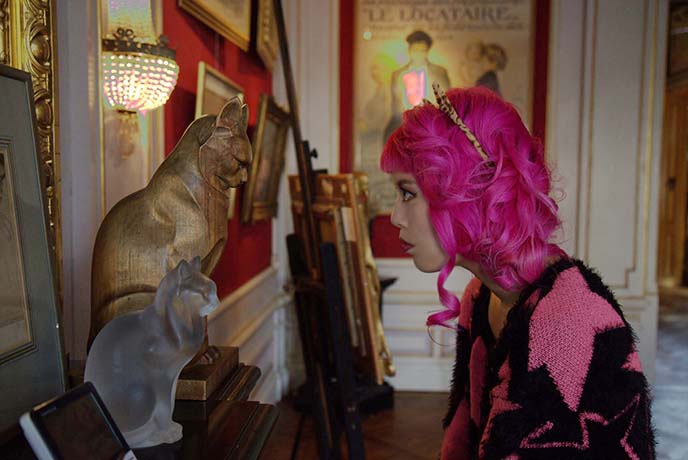
Katten Kabinet’s collection includes depictions of all types of cats (various species, colors), in a variety of mediums. I had a stare-down with this grumpy gold statue.
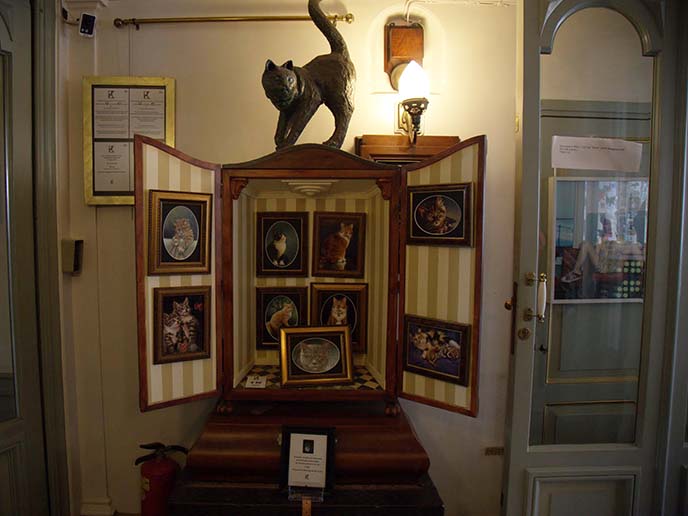
Many of the works are from the family’s personal collection, which gives De KattenKabinet a pleasingly non-commercial feeling.
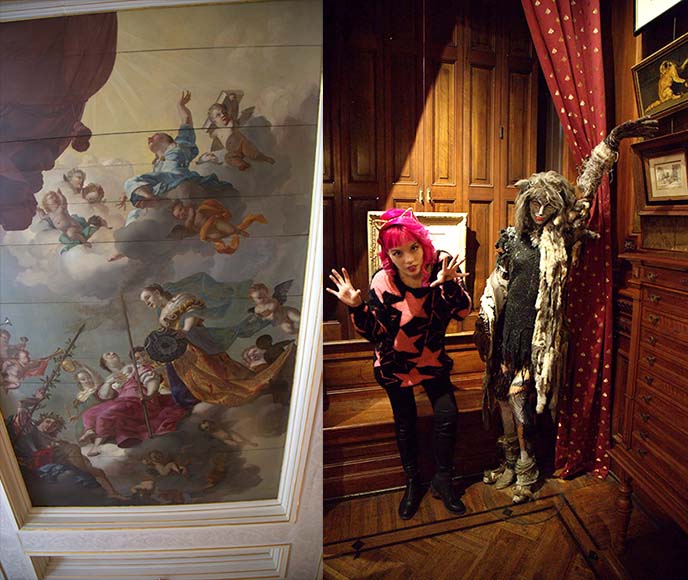
This classic Amsterdam house once belonged to a 17th century merchant. Look up, and you’ll see a restored ceiling painting from this era.
However, there are contemporary works as well. In one corner, I found a spectacular costume from Andrew Lloyd Webber’s “Cats” musical.
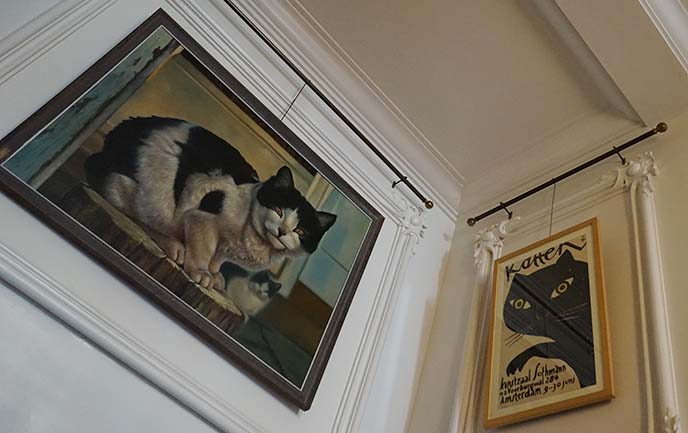
Without taking itself too seriously, the Cat Cabinet lets visitors learn about the role of felines in culture, over the centuries. These works range from advertisements for household products, to fine porcelain figures.
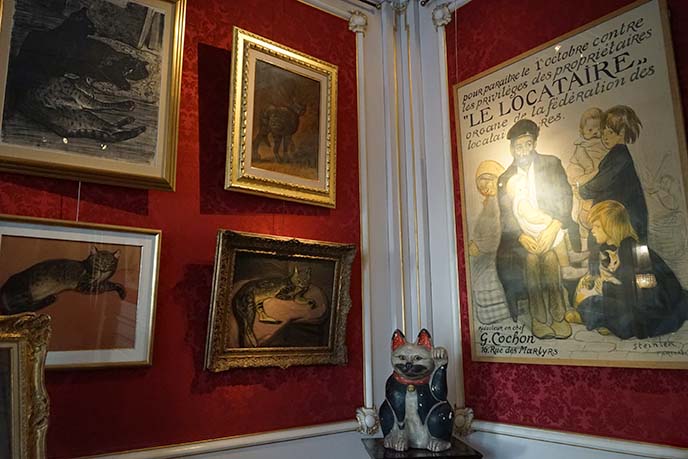
The gallery has partnered with famous museums like the Van Gogh, in order to present special works by famous artists. The “Cat-A-Logue” includes pieces from all over the world, such as this antique Chinese lucky cat statue.
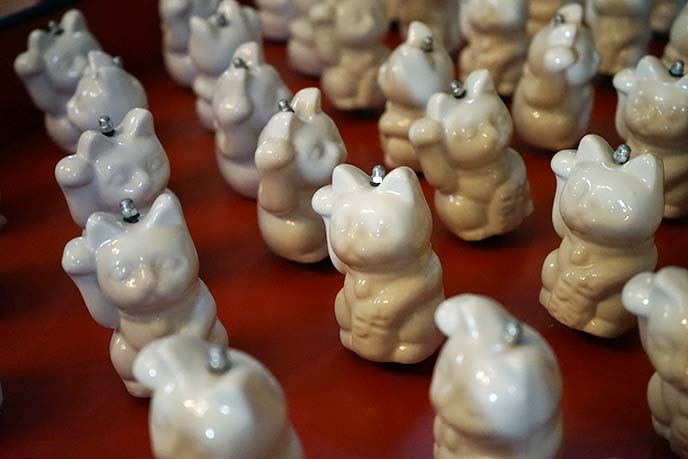
You can’t help but smile as you walk through the exhibitions. I’ve never seen so many cats in one place!
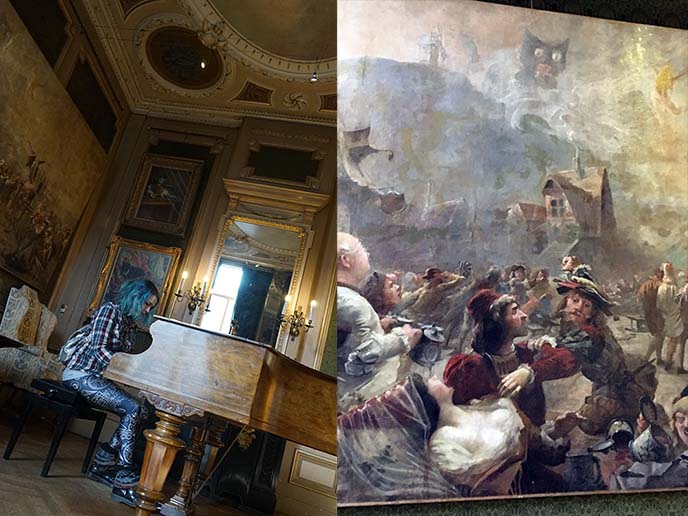
Arina played a few songs on the grand piano. Behind her, it took us a minute to find out why this sprawling painting was cat-related.
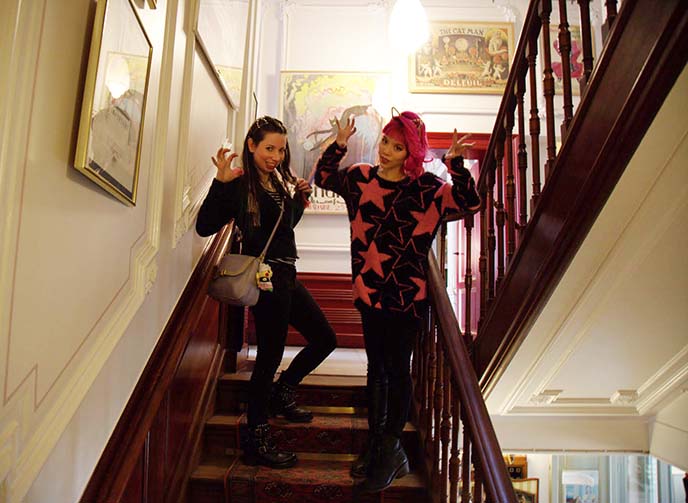
Movie buffs may recognize this as a filming location for “Ocean’s Twelve.”
(If you like my star sweater, click for more designs below:)
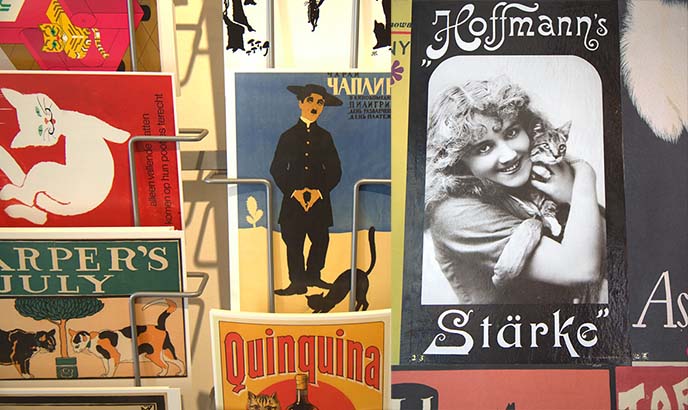
The gift shop is just as joyful. The perfect place to pick up a unique souvenir for a cat enthusiast.
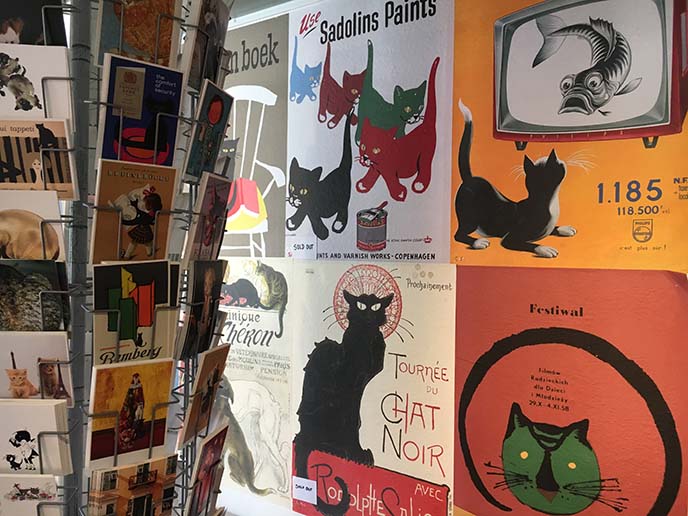
Isn’t the wide range of kitty-designs inspiring?
If you’re a fellow cat-lady, come on down to KattenKabinet. This funny Amsterdam museum has our paw-stamp of approval.
(You can watch Leyla’s video about our day here and above.)
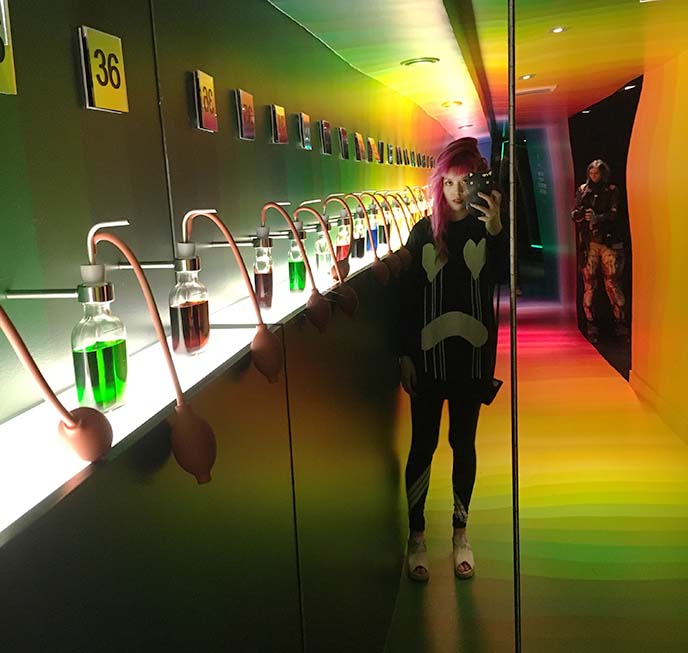
Now, let’s get trippy at The House of Bols! Once more, this is not a typical museum. Bols is better described as an interactive cocktail / liqueur experience for all five senses.
(I’m wearing this Long Clothing Drippy sweatshirt with side pockets.)
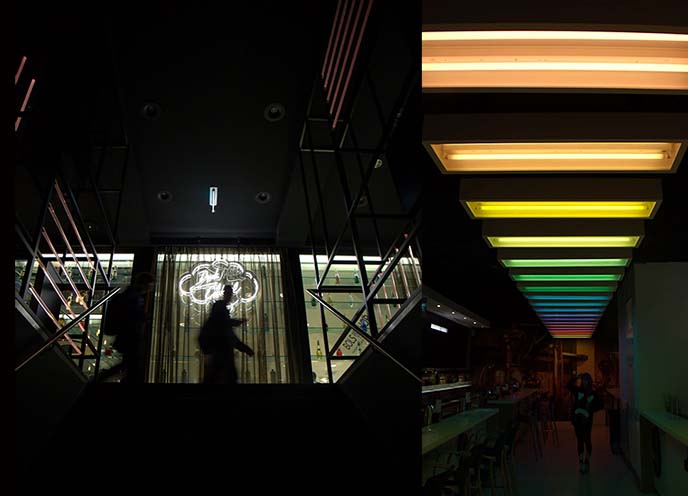
House of Bols is located on Amsterdam’s Museumplein — where the major museums are — and was recently renovated. (Address: Paulus Potterstraat 14, 1071 CZ Amsterdam, Netherlands)
The new design is modern and intriguingly lit, and each room is designed to stimulate the senses. In the rainbow-colored “hall of taste,” I got to squeeze the bottles and guess the liqueur aromas, ranging from green apple to butterscotch.
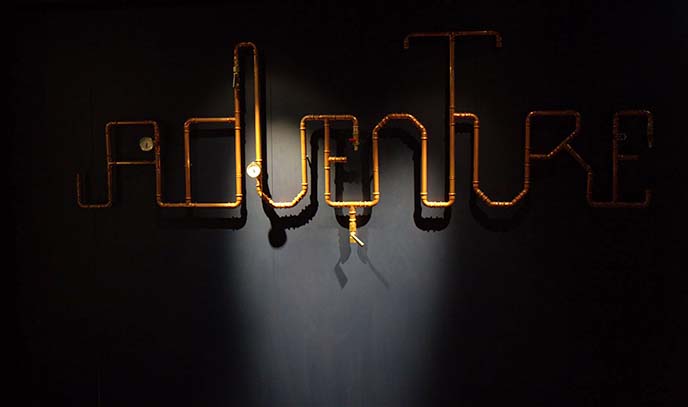
Using various media (video, sound, sculpture, photography), the museum tells the story of the Bols family, who started producing bottles of liqueur in 1575. Lucas Bols is the world’s oldest distilled spirits brand, and remains popular worldwide today.
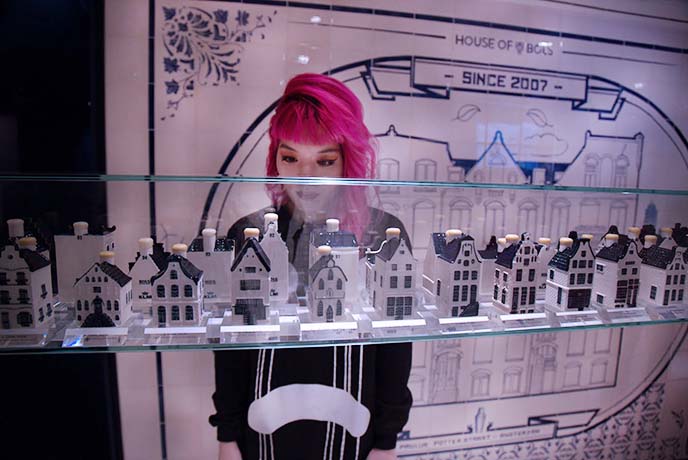
Bols currently has 48 creatively flavored spirits, as well as genever: the neutral or juniper-flavored national liquor of the Netherlands. This is a 35% alcohol that can be a bit similar to gin, and ideal for mixing cocktails.
I thought these blue houses were toys, but they actually are bottles with a cork on top — and contain Dutch Genever!
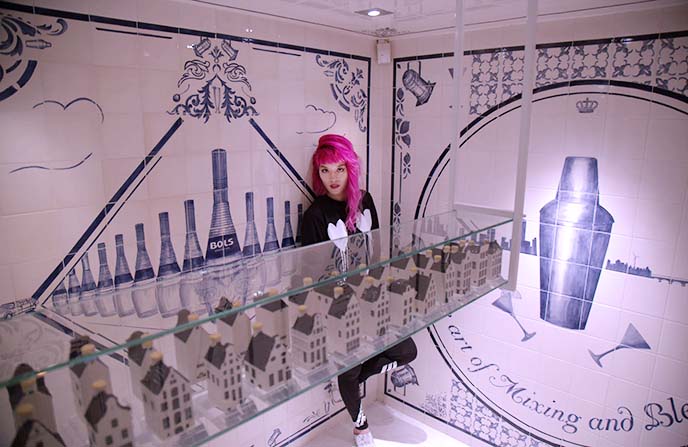
Starting in 1952, KLM Airlines has given these “Delft Blue Houses” to business and royal class travellers. There are 96 different styles, and collectors are keen to have one of each.
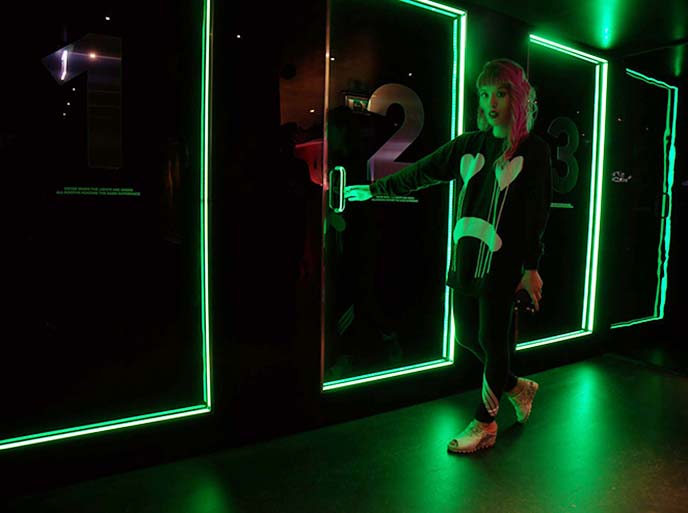
What lies behind Door #2? I received a small jar of liqueur, and went inside to find out.
Suddenly, I was transported into an interactive experience called “The Art of Flavour.” Lights flashed and swirled, the floor buzzed, and music played. The taste on my tongue shifted along with these sensory changes — amazing.

In the distillery room, I learned about the extraction process and distillation of flavors. The Bols portfolio includes more than 20 brands including liqueurs, genever, gin and vodka.

Guests are encouraged to dip their hands into these bins, and smell the various natural ingredients that go into the century-old recipes.
The 48 infusions include berries, fruits, herbs and botanicals. Ginger, peppermint, blueberries, dates, amaretto, and more.

The final stop: Bols’ Mirror Bar. You can ask the professional bartenders to shake you a delicious cocktail (they are graduates of a special in-house training program)… or create one yourself.
I chose the latter, so I picked and printed out a cocktail recipe on the touch screen. I selected the “Dutch n Stormy,” which combines fresh lime and ginger beer with genever (instead of rum).
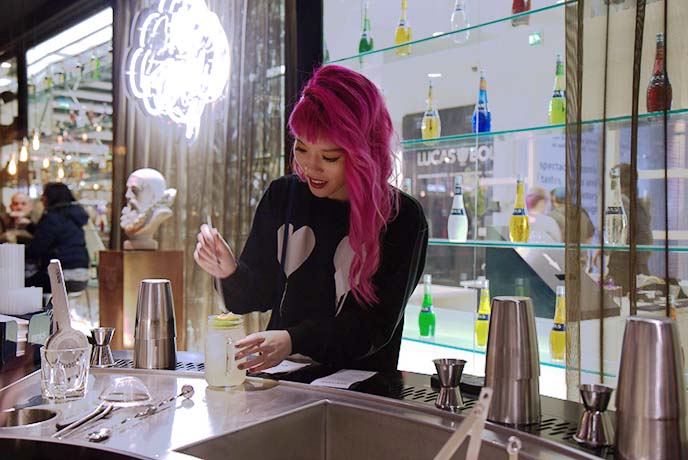
Time to shake, shake, shake! I had never made a professional cocktail, and it was fun to test out various recipes using jiggers (the measurement device) and shakers.
Visitors can also come here for group cocktail-making lessons, or book a Bols tastings or food pairing.
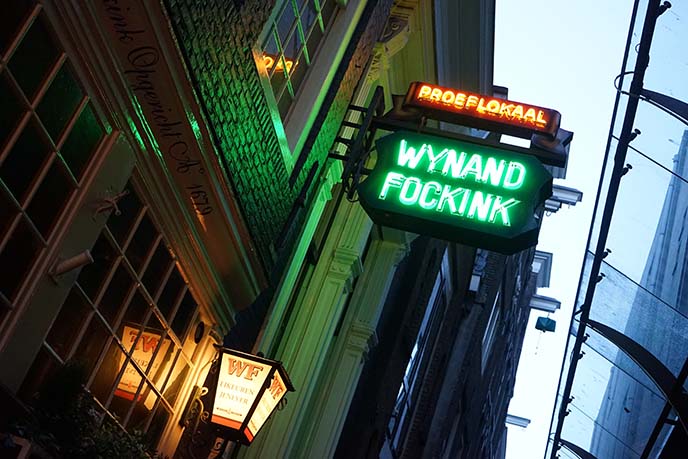
On another evening, we tried a variety of spirits at Wynand Fockink, a Dutch tasting tavern (proeflokaal). Established in 1679, this is the oldest tasting room and distillery in the city.
The bar is located not far from the Red Light District (address: Pijlsteeg 31 & 43, Amsterdam, Holland).
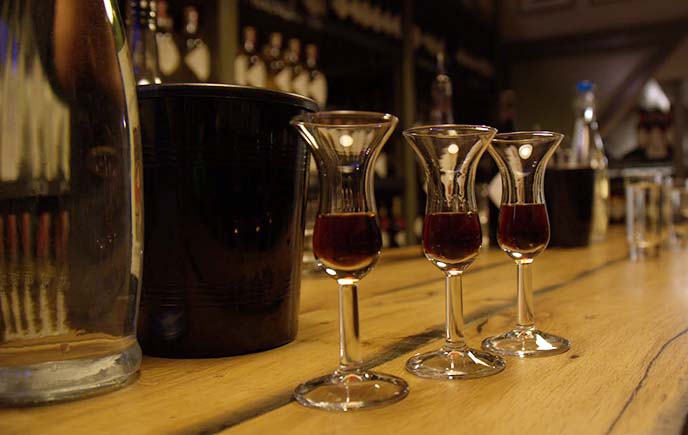
We took part in a tasting session, but you can also walk into the adjoining Wynand Fockink bar any time for a drink. It retains the 17th century atmosphere, and serves the liquors in the traditional fashion: filled to the top, in a tulip glass.
The “proper” way to take your first sip is by putting your hands behind your back, leaning over, and slurping the head off the top. Not even the royal family can get out of bowing to the drink — if you try to pick it up, you’ll inevitably spill it!
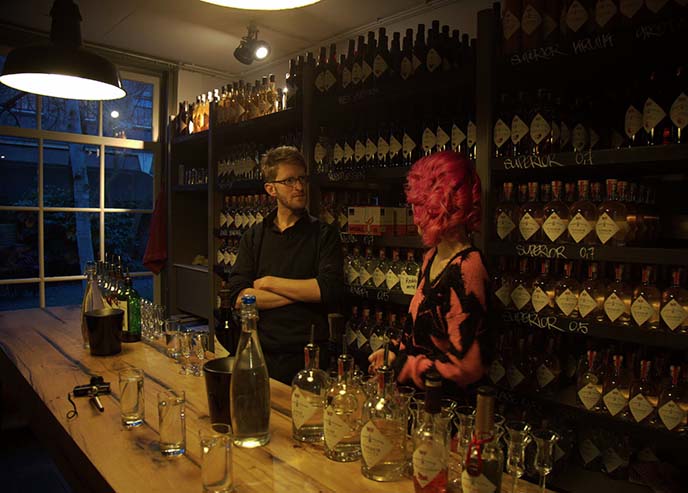
We tasted a variety of liqueurs and genevers, which are still made using the same 17th century traditional craft methods. The Dutch distillery produces more than 70 varieties in small batches, which preserves the high quality of the product.
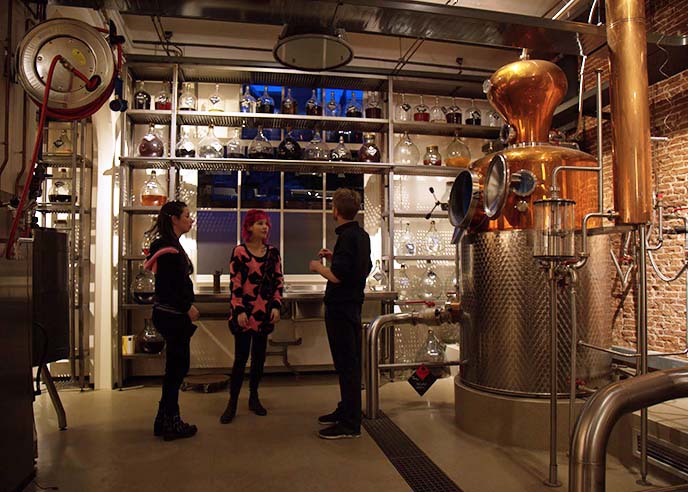
Our guide took us into Wynand Fockink’s distillery — which had a “Breaking Bad” vibe! There were rows of flasks, filled with fruit and herb infusions. Everything is hand-brewed in this small space, just as it was centuries ago.
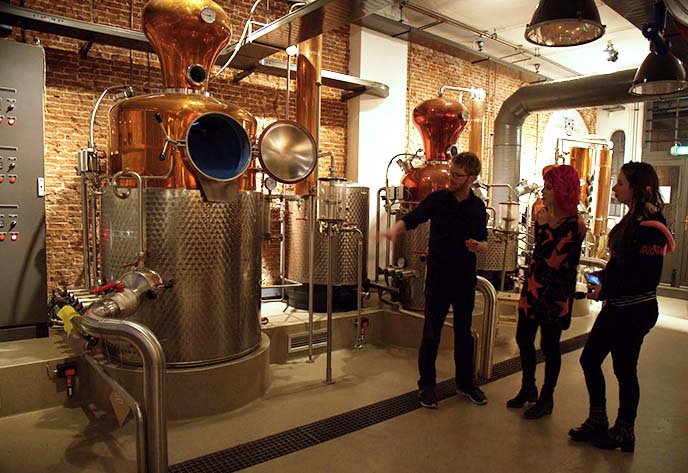
The equipment has been updated (and has a steampunk look), but the process of making these traditional Dutch liqueurs is exactly the same.
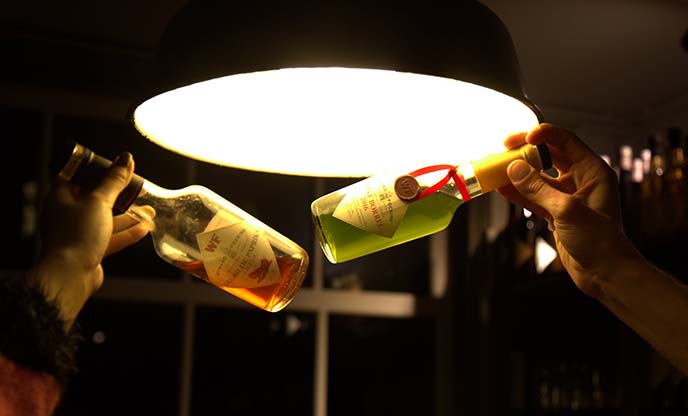
Back in the tasting room, our guide entertained us with stories about the spirits while we tried them. For example, the Dutch would historically serve “Naked Belly Button Liqueur” at parties, where a pregnant mother would show her growing belly!
Wynand Fockink is not afraid to experiment with limited-run flavors. They created a pine-infused Christmas tree one during the holiday season, and a charred red pepper flavor that was unexpectedly delicious. (We picked up a few flavors at their candlelit shop next door).

I hope you enjoyed this first taste of Amsterdam! Coming up, there’s a visit to the Miffy store and more… stay tuned.
PS: If you’re a museum-lover like me, I highly suggest you pick up the I Amsterdam City Card, which is what we used during this trip. It’s an unlimited travel pass for 1, 2 or 3 days, with tons of benefits.
The IAmsterdam card includes free public transport and entry to all the major attractions, including quirky museums and canal cruises. The perfect way to maximize your visit, and visit tons of places for a much lower price than if you bought individual entry tickets.
SHARE & COMMENT
Tokyo Goth clubs & absinthe bars! Gothic party Midnight Mess, Decabar Z, Japanese tribal tattoos.

Greetings from the red torii gate of Hibiya Shrine! Ready for more alternative travel tips from Japan?
I haven’t posted any updates recently to my Tokyo Goth clubbing guide, so keep reading for the latest party / nightclub information, as well as a peek inside an absinthe bar.
I’ll also take you to two Godzilla statues, and an exhibit of Japanese modern primitive tattoos with Keroppy Maeda (who did the infamous bagelheads for our TV shows).

I receive far too many emails from travelers, asking for information about Japanese Goth and Alternative parties / clubs. It’s impossible for me to look up specific information for everyone, so here’s what I encourage you to do:
1 – Consult my Tokyo Goth clubbing guide, which highlights parties and events from over the years.
2 – If you’re reading this post in 2017, I suggest you check out the Facebook pages of Midnight Mess, Decabar Z and Department H. Upcoming parties will be announced there, usually about a month in advance. There are also smaller and less frequent alternative / Goth parties, but it’s impossible for me look up everything for each person, as I’m sure you can understand.
So again, please check out this club guide and research the party names I mention there, to see if they have any upcoming events. I hope you have a great time!

We’ll delve deeper into the nightlife further down in this post. But let’s start with a visit to Hibiya Jinja in Minato-ku, by Park Hotel Tokyo (where we stayed).
Outfit details: My sunglasses are these exact ones. I paired fishnet tights with my leopard print dress, which is Gladnews Japan (it’s available for sale on my Depop).

Although it’s now surrounded by busy streets, this peaceful Shinto shrine dates back 400 years. I smiled at the statues of fox spirits, and washed my hands in the running water of this purification fountain.

Ring my bell-el-el. I’m tugging a rope that leads to a “suzu” or Japanese Shinto bell that contains pellets. The ringing sound calls the kami, or spirits, which brings in good fortune and positive energy.

Kitsune (foxes) are prominent in Shinto folklore. They’re messenger spirits to Inari, as you’ll recall from my visit to the famous shrine of Fushimi Inari in Kyoto.

There’s another creature who has a big impact on the Japanese imagination… ‘Gojira’!
I walked to the Godzilla Statue in Ginza, which is located next to Toho Cinemas (as they release all the Godzilla films). (Address: 1 Chome-2-2 Yurakucho, Tokyo)

Shin-Godzilla or Godzilla Resurgence was still playing in the theater when we visited.
The nearby mall even had a Godzilla-themed cafe with food that was shaped like the monster’s paw! (For more about Tokyo theme restaurants, check out my book.)

I’m wearing these exact Vysen lavender sunglasses and this Shashi Tiffany choker necklace.
This little Godzilla statue is based on one of the older movie designs, and doesn’t seem so frightening. But inside the mall…

… there’s a much bigger and scarier Godzilla! This is the latest look for the “dai kaiju”, as seen in the new movie.

We saw a lot of fans come to take photos with the towering Godzilla statue (he’s so popular here). This was only a temporary pop-up so I don’t think this statue is here any more.
His little eyes and pointy teeth are a bit goofy when seen from up close….

If you’re a fan of the Japanese monster, you’ve got to stay at the Godzilla head hotel in Shinjuku like we did. Don’t miss these photos of our stay in the Godzilla Gracery Hotel.

One evening, I supported my friends John and Keroppy at their panel discussion on Japanese tribal tattooing at TAV Gallery in Asagaya. This small but progressive space showcases artists who are involved in alternative culture. (Gallery address: 阿佐谷北1-31-2 Suginami-ku, Tokyo, Japan)

John Skutlin, a cultural anthropologist who specialises in the study of Japanese tattooing and body modifications, speaks about the experience:
“On display at the TAV Gallery that night were photos from the Jōmon Tattoo Project, a collaboration between journalist and photographer Keroppy Maeda and black-work tattooist Taku Ōshima that attempts to recreate the tattoos of Japan’s Jōmon period (approx. 14,000~300 BCE) on modern human bodies.”

“Although there is no physical evidence of tattooed bodies from the Jōmon era, the people of that period left behind clay figurines called dogū, which depict human forms engraved with various swirling and spiraling designs that archaeologists theorize to represent scarification and tattooing. Chinese accounts from the second and third centuries CE record extensive tattooing among the people of the Japanese archipelago, making it even more likely that the Jōmon people had a rich tradition of tattooing,” says John.

The discussion held that evening included Maeda and Ōshima, as well as the Miho Kawasaki (chief editor of Tattoo Burst magazine from 1999-2012), Professor of New Materials and Technologies Werner Lorke (HfG Offenbach, Germany), and cultural anthropologist John M. Skutlin (The Chinese University of Hong Kong).
Subjects included the inspiration behind the project and speculation as to what kind of role tattooing played among the Jōmon people. Maeda believes that the urge to alter one’s body is universal, saying that, in the course of our evolution, “the first step to becoming a human being is the choice to change our own bodies artificially.”

John continues: “According to the project’s manifesto, the Jōmon tattoos are “inscribed upon real human bodies as modern tattoo designs to show how the primitive spirit of humankind will become a new identity to survive the postmodern life of the 21st century.” Ōshima, who spent time studying tattooing in Goa, India before traveling the world to ply his trade, is a master of bold black-work designs, many of which cover entire arms, legs, and bodies.”

“Nearly all of the volunteers for the project had never been tattooed before, and the striking designs indicate natural phenomena that would have been important to the tribal peoples of ancient Japan. Waves, snake coils, and tree branches are all motifs that can be seen in the designs of dogū and now recreated on the bodies of the project participants. “You could say that Jōmon tattooing is the true traditional tattooing of Japan, and the designs everyone knows from the Edo period [1603-1868] were Japan’s modern tattooing,” said Ōshima.

For more about John Skutlin’s research, you can read his interview with The Diplomat and watch his presentation at the University of Pittsburgh about ink and body modifications in Japan.
If you’re in Frankfurt, Germany between June 3-18, you can see the Jomon Tribe exhibition at Robert Mayer Zeigt Galerie. I’m excited to see how the modern primitive movement in Japan will continue to develop, and question the country’s taboos about tattooing.

While in Tokyo, John and I were also guests at Midnight Mess, the longest-running Goth club — and our hangout for a decade now! How time flies…
If you’re coming to Japan, I highly recommend that you check out their Facebook group page for upcoming events. DJ Maya always creates a welcoming space (and she and many of the guests speak English).

We gathered at Bar Shifty in Shibuya for the all-night party. Under the disco ball, Goths in black clothing danced to EBM, dark techno / electro, industrial, aggrotech and noise.

Posing with Athena, who often plays with Mistress Maya in shibari (rope-bondage) performances.

It was great to reunite with Maya and DJ Statik, the resident deejay who I’ve known for years.


As always, the party ran all night long (trains stop running in Japan after about midnight or 1am — so you have to keep on dancing til dawn!)

Midnight Mess always brings in underground performers and guests from around the world. That evening, DJ Maschinenpriester from Germany pounded out a special set.

I also invite you to visit Mistress Maya at her Gothic/Fetish Bar, which takes place every Monday & Tuesday at Grenier (a small snack bar in the gay district of Shinjuku). She’ll play alternative music, and make sure you are well fed with homestyle cooking and drinks. Address: 東京都新宿区新宿2-18-10 新千鳥街二階 (2-18-10 Ni-Choome, Shinjuku, Tokyo), phone 0363801199.

DJ Sin performed with a hooded head. (All of these club photos are by fake-fantasy).
Thanks to Midnight Mess for having us as the guests of honor!

My friends and I also stopped by one of our favorite Goth bars — Guinea Pig in Kabukicho, Shinjuku. I previously wrote about this bizarre horror bar here. The bondage baby and spine immediately set the dark (yet fun) mood of this tiny bar.
Address: 2-41-2 Leo Kotobuki Building 3-A, Kabukicho, Shinjuku, Tokyo. 1000 yen cover. Opening hours are generally 8pm to early morning. Phone: 03-3209-3455

There’s always an eccentric crowd of regulars sitting around the long, black bar. Yes, that’s a blood-splattered pole in the middle — and torture instruments in the back.

We love coming here to sit under the rotting flesh cross, and watch splatter-gore movies play on the big screen.

Obviously, Guinea Pig is not a bar for everyone. But if you love strange, obscure, weird Japan — this spot is for you.

Chains and zombie hands and live snakes — yes please.

Even though I am in Tokyo all the time, the city and subculture never grow old to me.

Guinea Pig caters to horror / experimental / slasher movie fans. When we visited, they were showing trailers from Herschell Gordon Lewis films (such as Two Thousand Maniacs and Blood Feast), as he had died that week.

Cheers to Guinea Pig, which remains one of our regular drinking holes! If you’re interested in Tokyo Visual Kei and Jrock bars, a Suspiria themed bar, and other oddities, check out my Tokyo nightlife guide.

Close-up on Atsushi’s spiked fang ring and studded bracelets. Now, to the next party…

There’s something about Shinjuku at night — lit up and buzzing — that fills me with joy, every single time I’m here.

Every time we’re in Tokyo, we stop to see our friends at Decabar Z (5F Shinko Building, 1-2-13 Kabukicho, Shinjuku-ku, Tokyo, Japan. Here’s a link to the map.)
John’s pentagram top is by Disturbia Clothing, makers of occult and Satanic fashion.

Tokyo’s alternative DJs, performers and personalities grace the colorful mural at the entrance of Deca Bar Z. Here’s Maya as a cat, offering a cup of sake in a pink kimono.

Devil horns to match this Satanic ouija board unisex shirt, by Disturbia.

Say hello to Preta Porco, who you’ll find behind the (Deca) bar! He’s easy to spot with his bright yellow foundation, contrasted with rosy red lips and cheeks.

Adrien le Danois, owner of Deca Bar Z, also runs the Tokyo Decadance parties. If you’re not in town during one of the decadence events, don’t fret — Decabar Z is open every evening, and there are always interesting theme nights such as “Addams Family.”

Grab a glass of absinthe, and chill out on the comfortable couches. (Here are more photos of Deca Bar Shinjuku, from my last visit.)

We loved the music at the “I Am Electro” night, run by Migon. The DJs play Depeche Mode, Visage, Europe and other favorites — as well as obscure synthwave and 1980s Goth.

As an absinthe aficionado, I’m always looking for the green fairy wherever I go.
Maya took me to Caribbean, an absinthe and rock bar in Kabukicho. (Address: Kabukicho 1-3-10 2F, Shinjuku Tokyo)

I drank Mansinthe (Marilyn Manson’s absinthe) and we chatted with the owner. He let DJ Maya control the song selection, resulting in the perfect Goth playlist.

The same owners also run the nearby Absinthe Bar Alternative (Address: 1-6-12-B1F, Kabukicho 歌舞伎町, Shinjuku-ku, Tokyo 160-0021). It’s a small basement bar, with several shelves of absinth from around the world — heavenly.

If you’re looking for more absinthe in Tokyo, check out Bar Tram in Ebisu.
Modern primitive tattoos, spatter-gore bars, Gothic club nights… isn’t Tokyo’s underground the best? For more coverage of Japanese alternative nightlife, come peruse my Tokyo Goth club guide. Have fun!
 LA CARMINA


