Category Archive for Tokyo + Japan
I stayed at Tokyo’s Godzilla Hotel! Gracery Shinjuku, Japanese theme hotel review, Akihabara Washington.
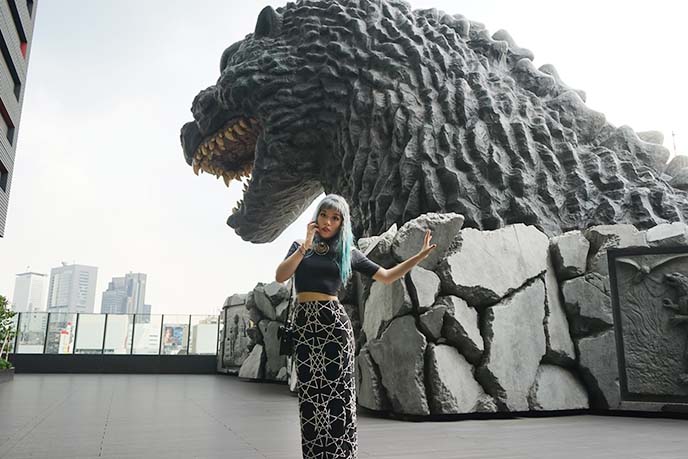
Skreeeonk! Watch out, Tokyo. It looks like Godzilla is taking over the city once again.
Did you know you can stay at a Godzilla monster themed hotel: Hotel Gracery Shinjuku? Only in Japan, of course!
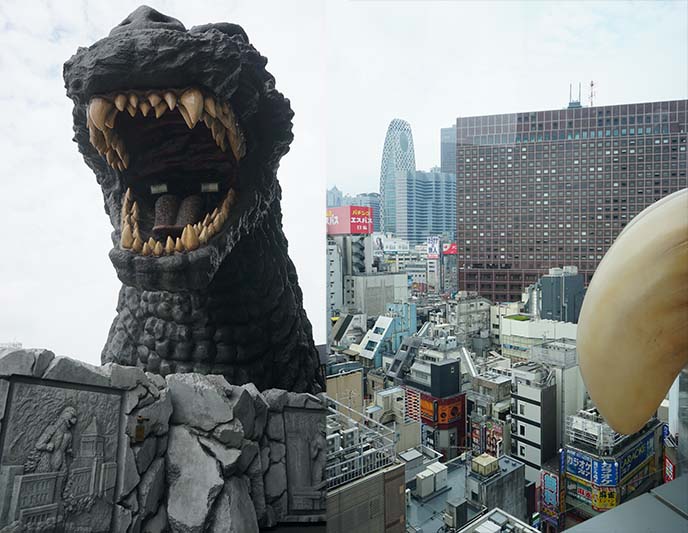
Let’s kick off 2017 with a roar. I’ll take you inside Gracery Shinjuku, a wonderfully idiosyncratic hotel in the best possible location. (Godzilla’s claw points over Kabuki-Cho, the host club and nightlife district where most of the Goth / alternative events take place.)
● You can book a discounted room at the Godzilla hotel here, using my special link.
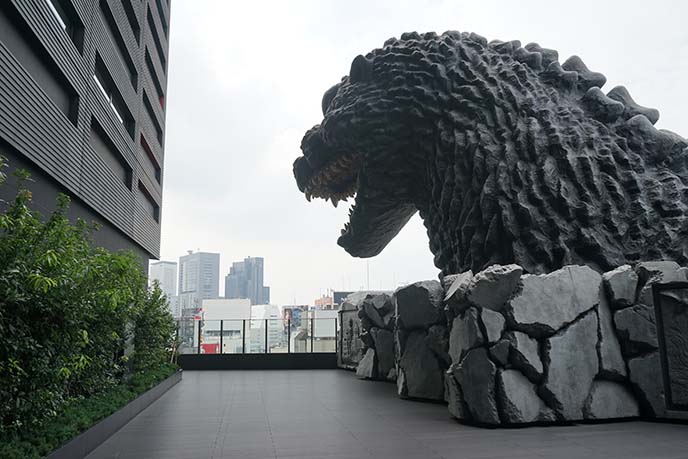
On the terrace of the hotel is a towering Godzilla statue — it doesn’t get more epic than this. The monster even moves and roars, with flashing eyes!
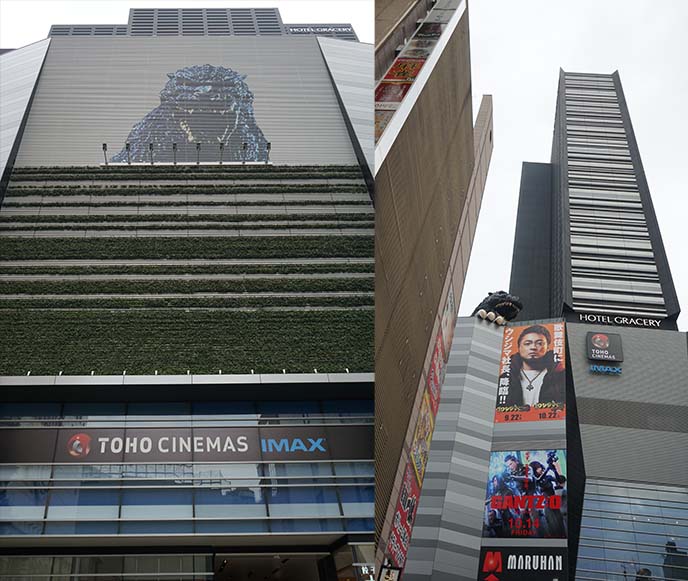
Where is this bizarre Japanese hotel located? From Shinjuku station’s East Exit, walk towards Kabukicho and go down the street near Don Quixote. Look up — you’ll see the Hotel Gracery sign, and Godzilla atop a skyscraper!
It makes sense that he’s towering over Toho Cinemas, which releases all the Japanese Godzilla movies. (Address: 1-19-1 Kabukicho, Shinjuku-ku, Tokyo, Japan.)
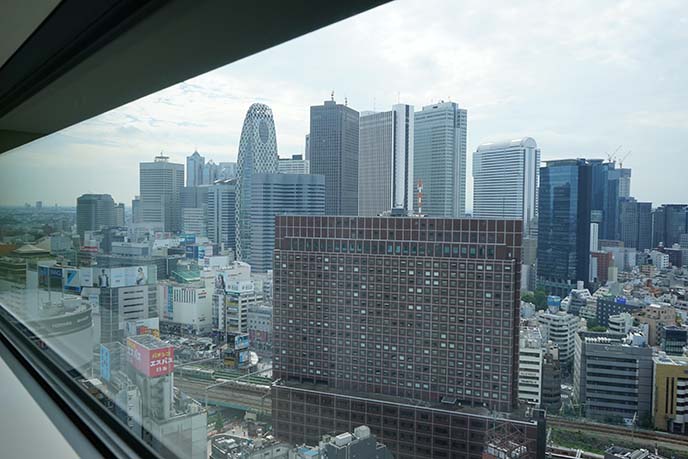
The hotel has 30 storeys, which meant I had these soaring views of Shinjuku from my window. Gracery’s rooms are simple yet spacious, which provides great value (prices are around $100 a night). I spent over an hour soaking in the large bathtub, using the free red bath salts that I got when I checked in.
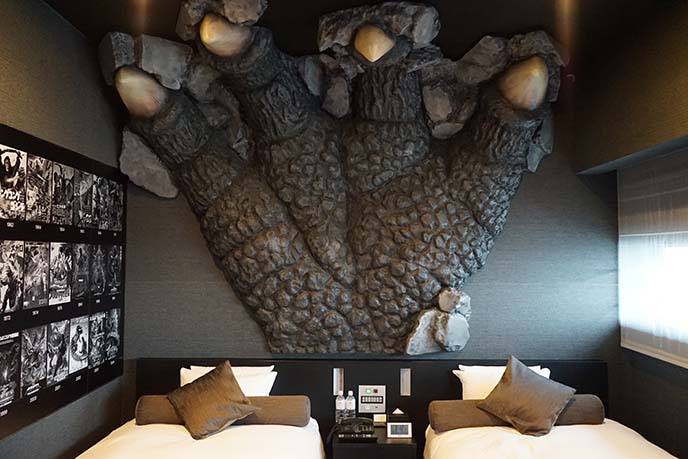
For fans of “dai kaiju”… There’s a Godzilla room that you can rent. Keep reading to see photos of the “monstrous” interior.
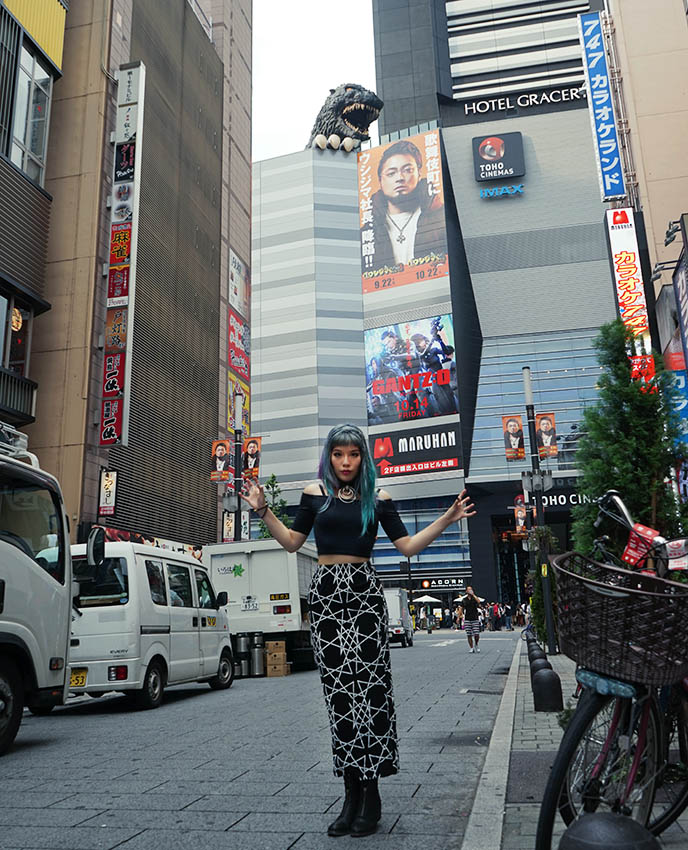
Hotel Gracery only opened in 2015, but already, it has become a Shinjuku landmark — thanks to the Godzilla perched menacingly over its ledge.
I’m wearing a Long Clothing Infinity Clip skirt. See more from this designer below:


If you’re a guest of the hotel, you can access the terrace where Godzilla lives… that is, if you dare.
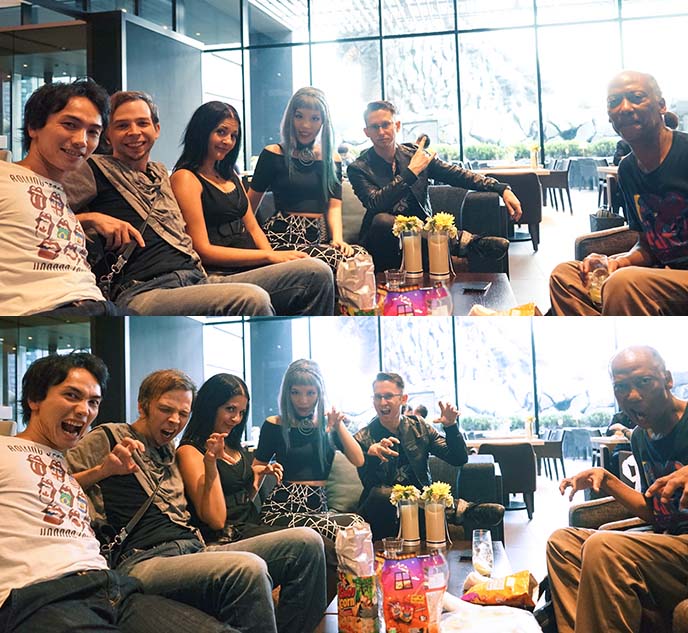
Hotel Gracery’s convenient location makes it a perfect hangout. John and I invited our friends to join us for drinks and snacks at “Café Terrace Bonjour,” located on the eighth floor.
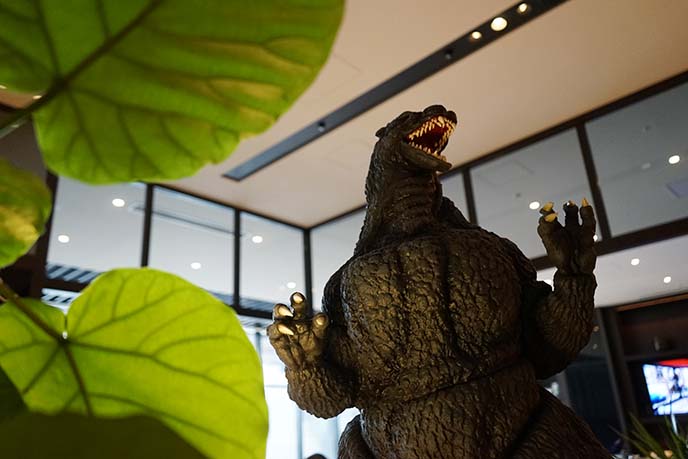
The cafe is guarded by a life-sized version of the monster, similar to this 1995 Godzilla statue that you can put in your home.
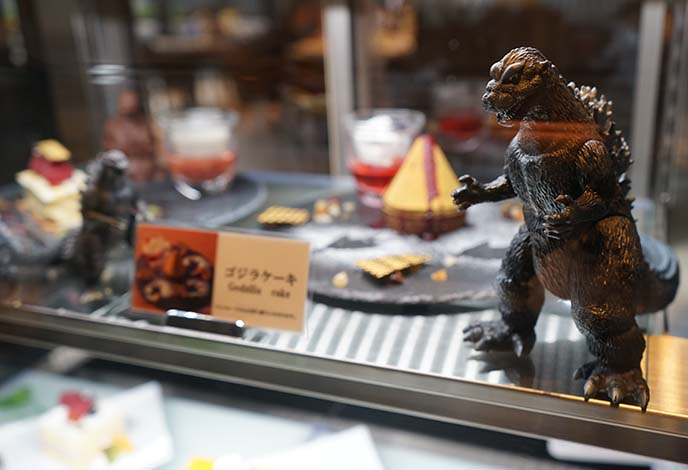
The relaxing lounge has an adjoining outdoor terrace, and large selection of snacks and cocktails. There’s even a Godzilla cake that you can bite into.

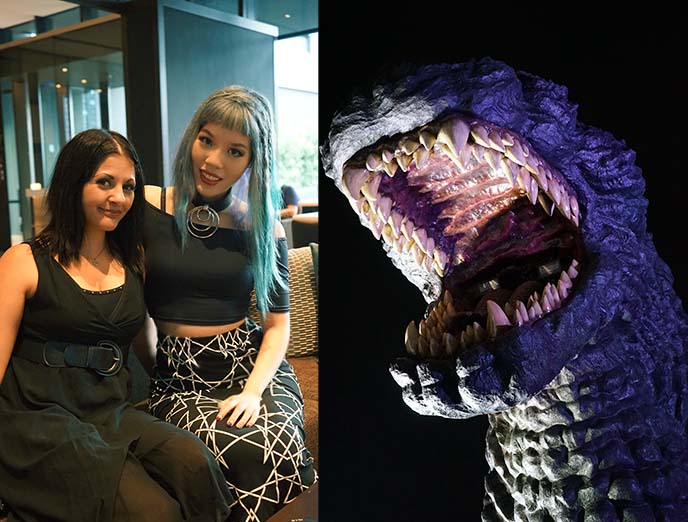
However, my friend Caro (who runs a Gothic baking blog) brought her own homemade spooky sweets for us to share. These are marshmallow ghost cookies are made with white chocolate and absinthe, in colors that match her green liquid lipstick.

Everyone grabbed a ghoul to eat. By the end of the evening, they had vanished into thin air.
(Many of us are wearing Killstar, Long Clothing and other Gothic styles that you can get on this site.)
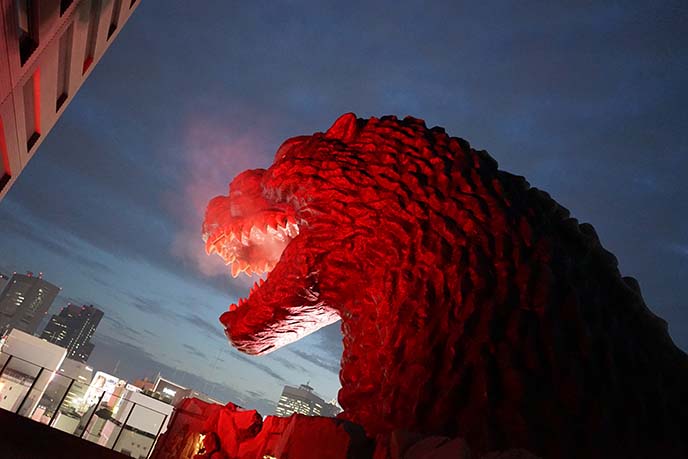
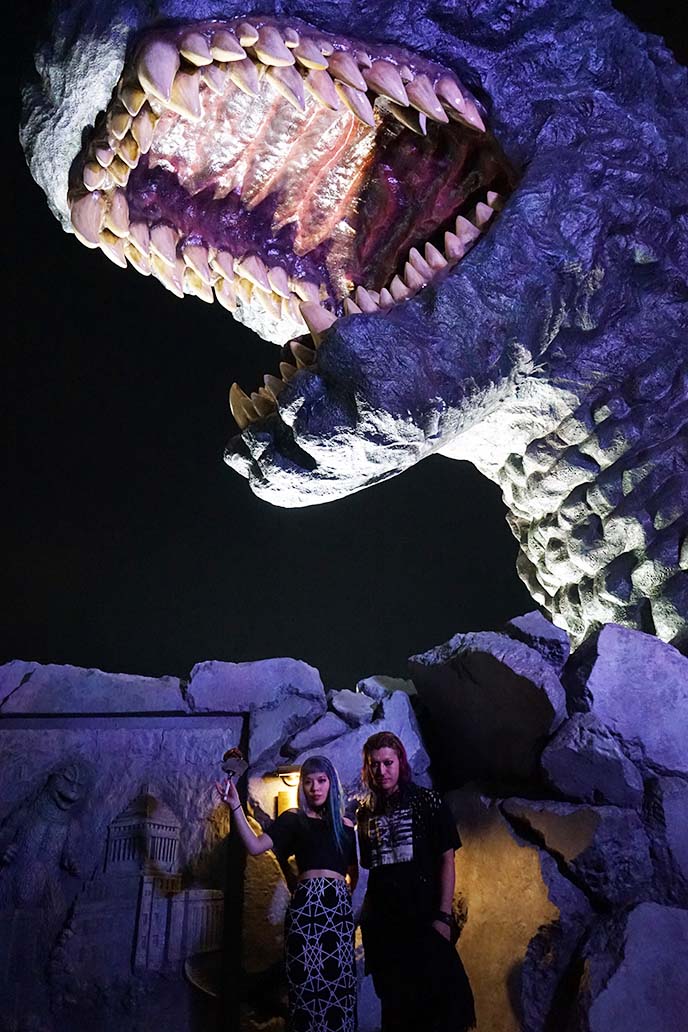
In the evening, Godzilla awakens at the top of each hour (6pm, 7pm, etc). For a few minutes, he shakes his head and his eyes flash like lightning. The creature bares his pointed teeth and spits out fog — or rather, his secret weapon of “atomic breath.”
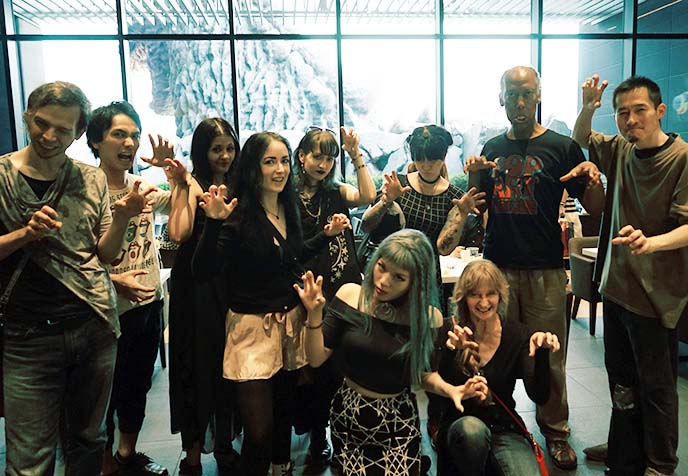
We did our own impression of the scary beast. I think Goths and Godzillas get along rather well together.
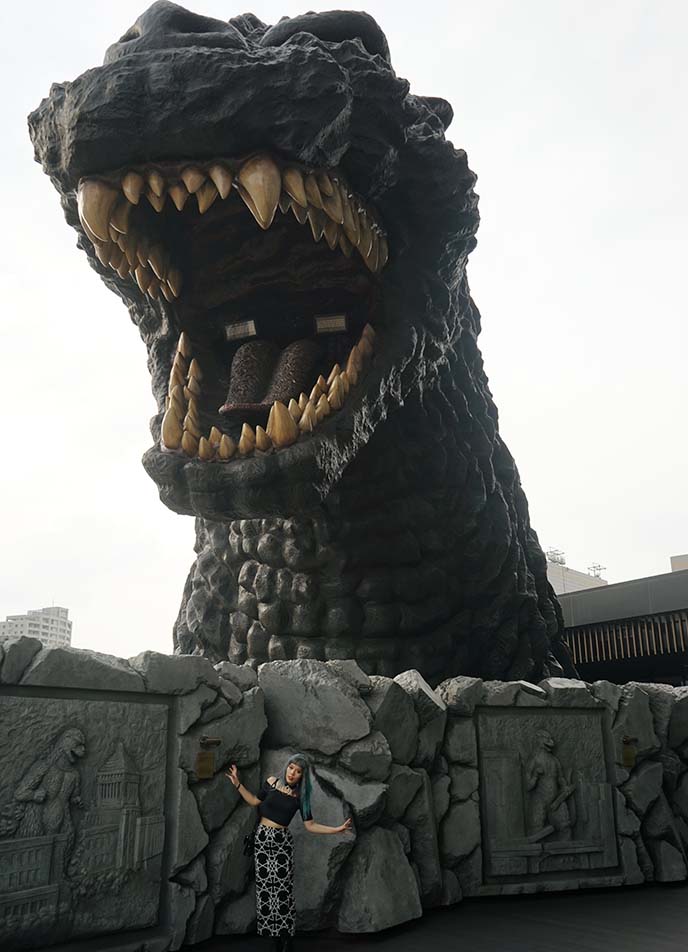
Beneath the behemoth, there are carvings of Godzilla from his films over the years. The monster’s design changes every time they release a movie, such as with the latest “Shin-Godzilla.”
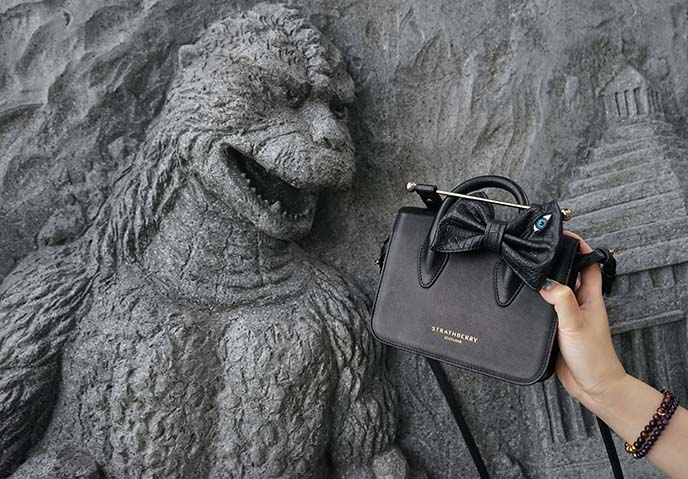
Some of the depictions are more goofy-retro than frightening.
The sea-monster tries to take a bite out of my Strathberry of Scotland midi leather tote, which I decorated with a Devilish 666 bow.

For those who aren’t familiar with “Gojira,” (ゴジラ), the monster first appeared in Ishirō Honda’s 1954 film, Godzilla (more info here). He’s a raging, gigantic prehistoric sea monster whose powers were awakened by nuclear radiation.
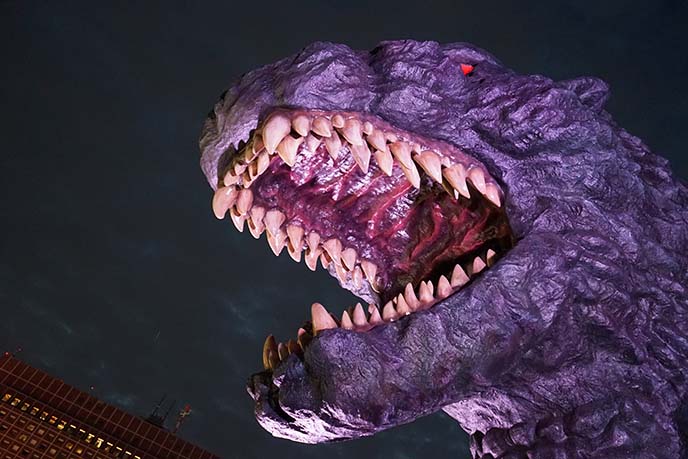
Japan’s Godzilla quickly became a legend, and his name is now known all over the world. To this date, he’s the star of over 20 films, as well as video games, manga and spin-offs featuring his allies, rivals and juniors.

John, Atsushi and I are fans of Godzilla, even though he’s destroyed Tokyo over and over. My skirt is a Long Clothing Infinity Clip design; find more from this label at:
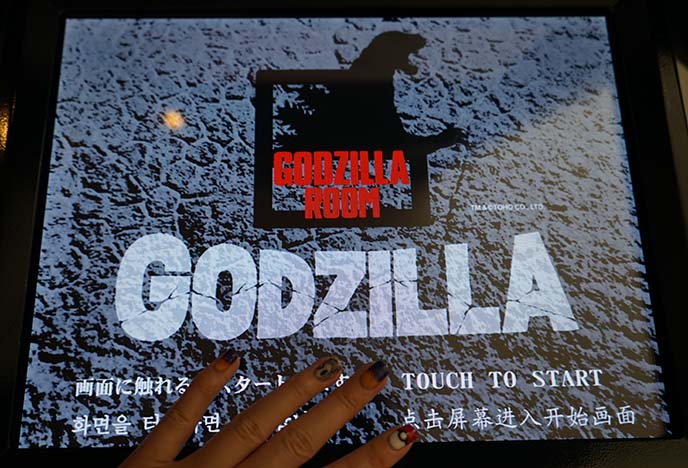
For super-fans, Hotel Gracery has two special suites dedicated to Godzilla! One gives you the perfect view of Godzilla’s head, from your window.
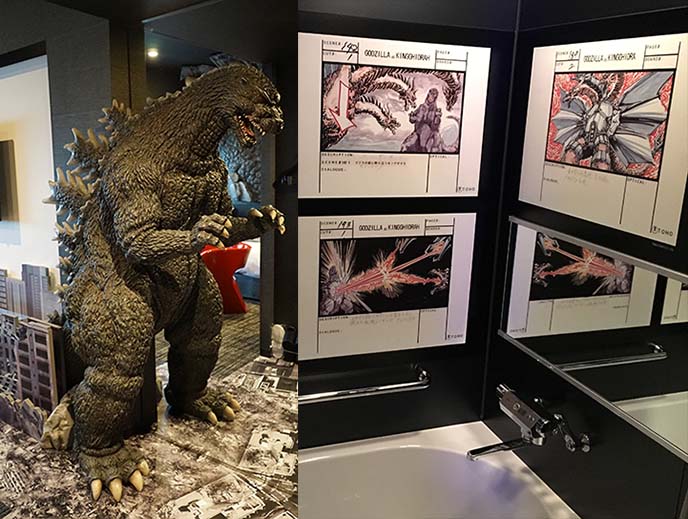
The other, called “Godzilla Room,” lets you get immersed in the monster’s universe. Everything is decorated playfully, such as trick walls that reveal art in black light, and a mega-statue that greets you when you enter.

The suite’s windows have decals of his frenemies such as Mothra, who appears to be spreading his wings over Tokyo.
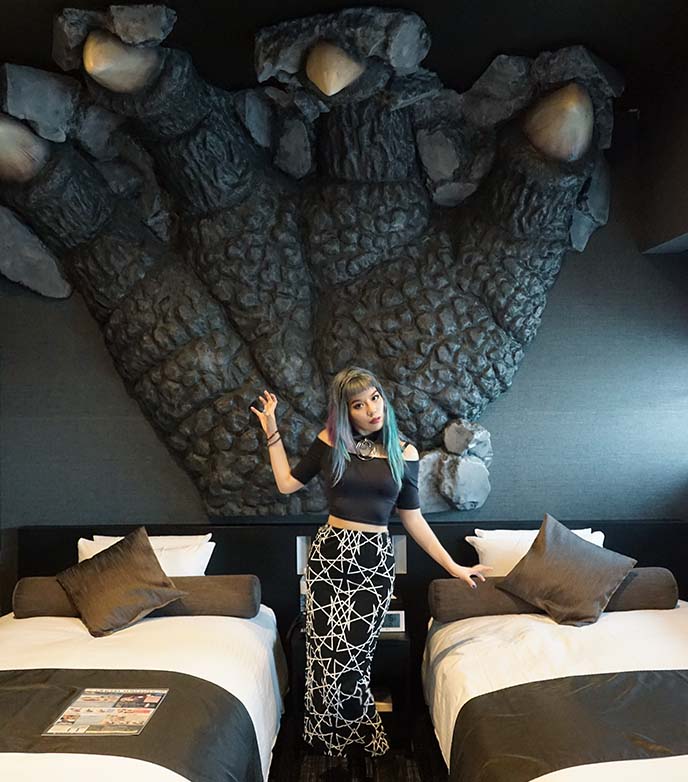
High five to Gracery Shinjuku, for the creative Godzilla room decoration. Would you be able to sleep with his scaly hand on the wall, looking like it’s about to grab you?
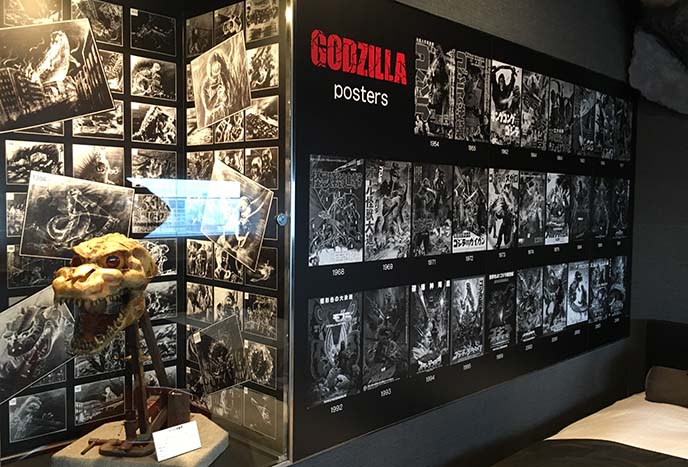
One of the walls is decorated with his movie posters, from the 1950s to today. I enjoyed seeing the concept evolution over time. (Photos by John S and me.)
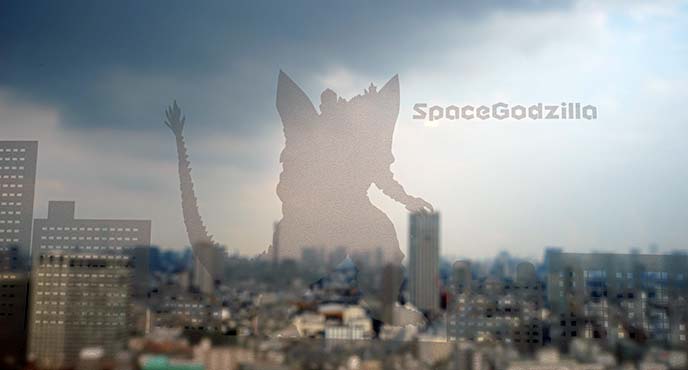
SpaceGodzilla came down from the stars. Such a creative window design — from this angle, it looks like he’s about to tear this skyscraper out from the ground.

The Japanese love their home-grown monster, and even named this Godzilla road after him (leading from Meiji-doori to Hotel Gracery).
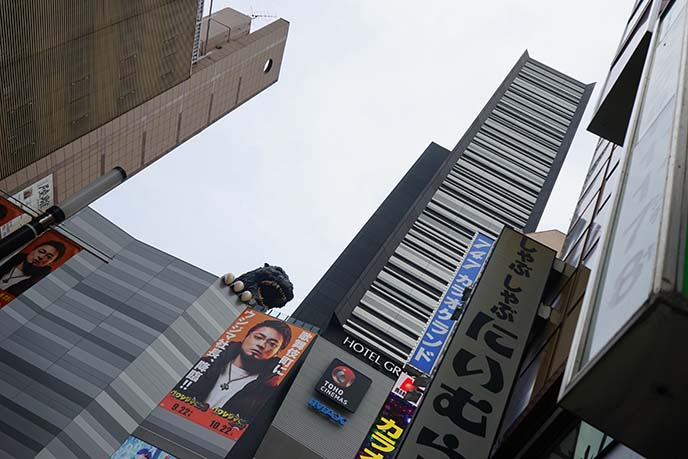
I always recommend that travelers stay in Shinjuku, since it’s close to everything. Hotel Gracery is in the best possible location: near Decabarz (the alternative Goth club), Golden Gai, host clubs, bizarre theme restaurants, cat cafes, and all types of delicious food. In the area underneath the hotel for example, there’s takoyaki, okonomiyaki, sushi, and Krispy Kreme.
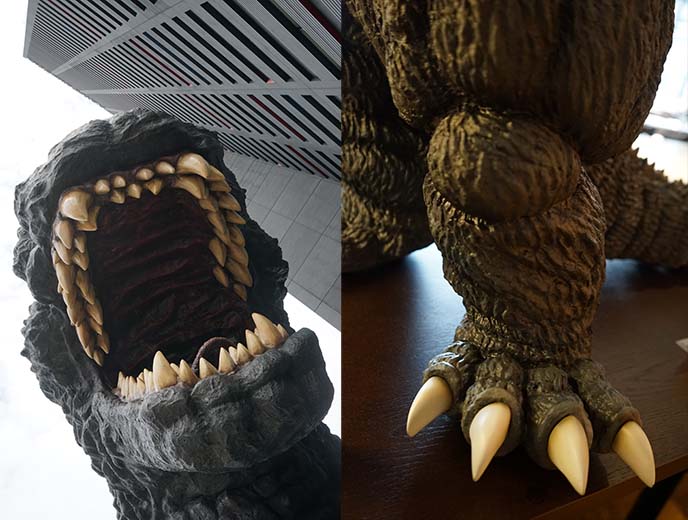
Hotel Gracery did a spectacular job in executing the Godzilla theme. There’s impeccable attention to detail…
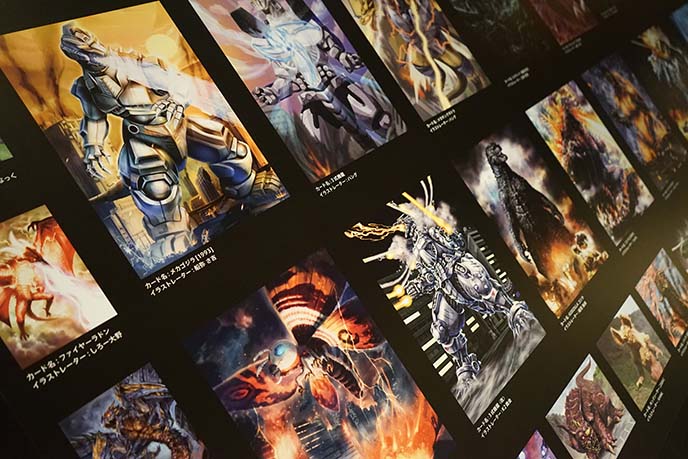
… and tributes to the “kaiju” all over the lobby, such as this mural leading up to the elevators.
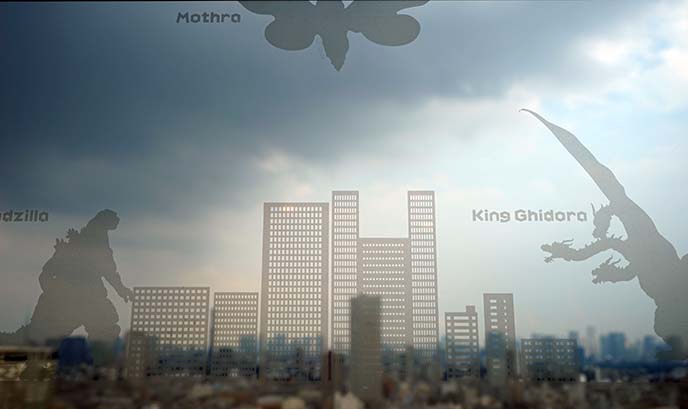
Fans of Godzilla, King Ghidara and Mothra — you’ve got to check out this unique hotel.

While in Tokyo, I got to rest my head at yet another theme hotel, Washington Akihabara. (Japan’s Washington Hotels are under the same umbrella as Gracery.)
Located in the “otaku” district of Japan, this is the only hotel in the world with a room dedicated to train aficionados. One of the walls contains a glass case, filled with miniature re-constructions of railway stations. (Above, can you spot No Face?)
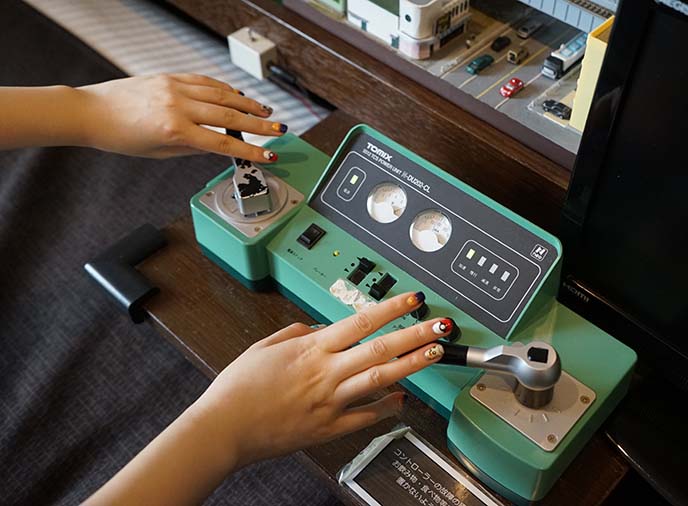
Washington Hotel is once again in a convenient location: a 1-minute walk from JR Akihabara Station. (Address: 1-8-3 Kanda Sakumacho, Chiyoda, Tokyo)
Train fans can reserve Room 1304, which has a huge train track with professional levers. You can borrow one of the hotel’s model trains, put it on the rails, and use the gears to make it whizz around at different speeds.

Above, you can see a blue and green train looping around on opposite tracks. The model set includes the city’s landmarks, including Tokyo Tower.
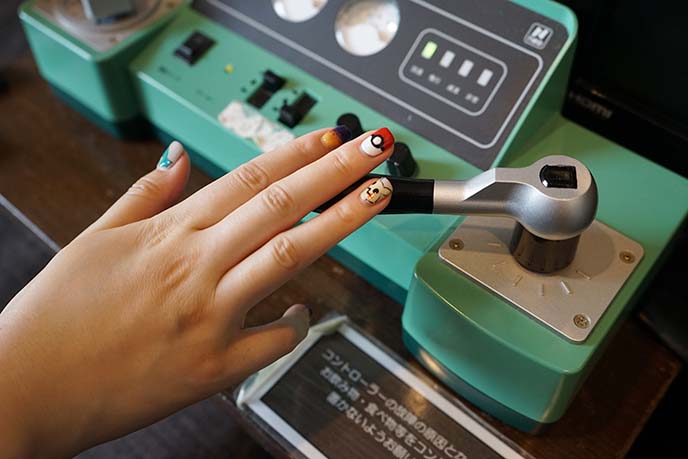
Once again, the rooms are clean and spacious, and excellent value (book a room for under $90 here). Hotel Washington also has a terrific included breakfast: I ate my fill of hiyayakko (chilled soft tofu), pickled vegetables, tamago and miso soup every day.
You can also find out more about Hotel Gracery Shinjuku and book a room here (you can request the Godzilla suite).
Have you watched any of the Godzilla movies? Would you stay in this eccentric theme hotel?
Coming up – a travel video and more posts from my JR Rail Pass trip through Japan. If you’re planning to come in the spring for cherry blossom season, it’s a great idea to get one of these unlimited passes, which let you ride the rails at a fraction of the cost.
SHARE & COMMENT
Park Hotel Tokyo: luxury art & culture hotel in Shiodome! Japanese artist project, decorated theme rooms.

As that Italo disco song goes: “Tokyo by night / City full of light. I will lead you through / Tokyo by night.”
That sums up the feeling of my stay at Park Hotel Tokyo, a modern skyscraper filled with Japanese design and culture. Every evening, I looked out from my Artist Room on the 31st floor — decorated floor-to-ceiling in wabisabi — at the neon twinkle of the Tokyo Tower.
(Above: I’m wearing a rose gold cuff bracelet and this exact 90s style choker by Shashi Jewelry. And clearly I’m on Snapchat, at username @lacarmina.)

As you’ll recall, I was traveling around Japan using a JRailPass, which gives me unlimited access to JR trains (including shinkansen, buses and some ferries). If you purchase a Japan Rail Pass like mine (for 1-3 weeks), I recommend beginning your trip in Tokyo. Spend at least 5-7 days here, and then activate your pass to start riding the rails.
I’m glad I stayed at Park Hotel in Shiodome (near Ginza), as the entire experience is designed to immerse you in Japanese art and culture. My Instagram lit up when I showed you the soaring views from my hotel room window.
(Find out more about Park Hotel, and book a stay.)

From the moment you step into the 25th floor lobby, Park Hotel lives up to its reputation for omotenashi, or Japanese-style hospitality. The kind staff anticipates all your needs, and everyone speaks fluent English.
(For my Japan travels, my stylist Stephanie Hoy at Sugar Skull Studio made my hair grey and green.)

In 2012, Park Hotel Tokyo initiated an “Artist in Hotel” project, which brings in local artists to decorate a room on the 31st floor.
To date, there are over a dozen art rooms on this floor, each inspired by some aspect of Japanese culture. The creative themes include Sumo, Zen, and Lucky Cat. Photographer John S and I got to take an inside look — read on for the details and to learn about each artist.
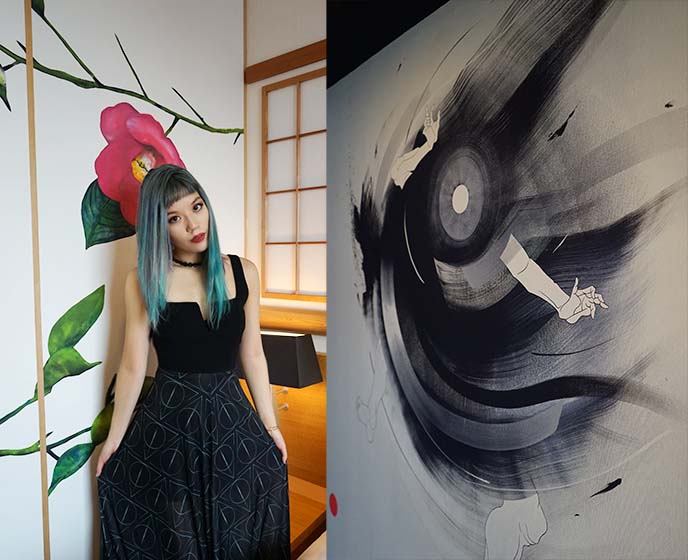
That day, I wore a corset-style tank top by C/Meo (Cameo). They specialize in romantic, unique cuts, such as this similar cut-out black shirt and this bodice top .
My black lace necklace is this exact choker by Shashi. With embroidered detailing and a lobster claw clasp, this choker is 90s Gothic perfection.
(Shop my look below, and click the arrows for more:)


At Park Hotel, the art immersion begins in the lobby. The artists who took part in the room project also have designs on display, and for sale.
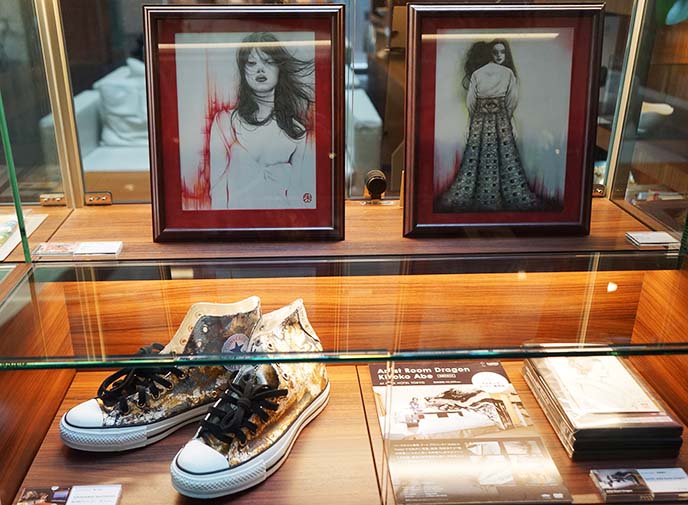
There’s so much to see in the lobby lounge. I admired the glowing circular halo paintings by Nobuo Hashiba, and peeked into glass cases of contemporary design. At night, the tall atrium walls light up with colorful projections.
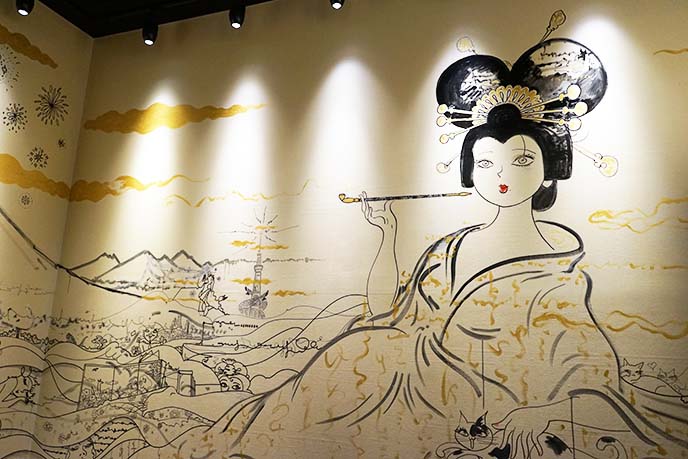
At this hotel, even the most unexpected spaces become canvases for creativity. Indoor smoking rooms are usually glum and bare-boned spaces. Fortunately, the funky artist Akihisa Hayashi (“Marron-chan”) stepped in, and turned the walls into a retro-sexy painting of a geisha, with golden clouds drifting out of her elegant pipe!
Look closely and you’ll see Tokyo landmarks along with flying sushi and ramen girls, Godzilla, a UFO, and cats.
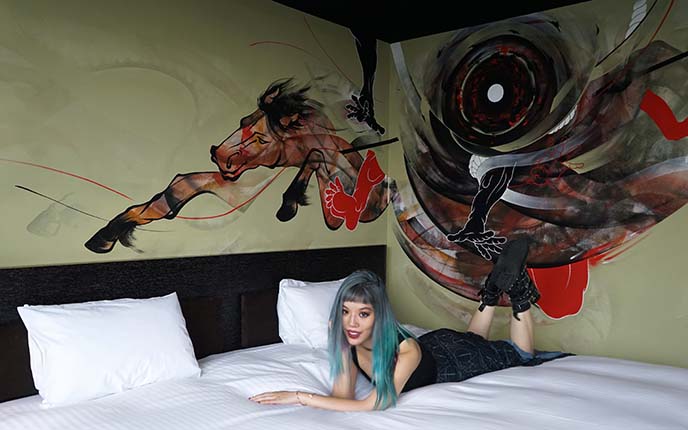
Guests can book any of the Art Colours rooms on the 31st floor of Park Hotel Shiodome. I’m lounging in “Kabuki” by Yamaguchi Keisuke: he painted this horse and flowing circles while staying in this room for 16 days.
His inspiration is “Yanone,” a Kabuki performance that captures the beauty of ancient Japanese traditions. The arms and legs blur into curves, representing the expressive movements of the theater.

In another room, painter Nanami Ishihara took the concept of “Festival” as her theme. The party never stops: every inch of free space is covered in rainbow rabbits, elephants, deities and schoolgirls doing the “Bon odori” matsuri dance.
She even turns functional objects into playful art. In the closet, the air vent becomes the mouth of a dancing lion!
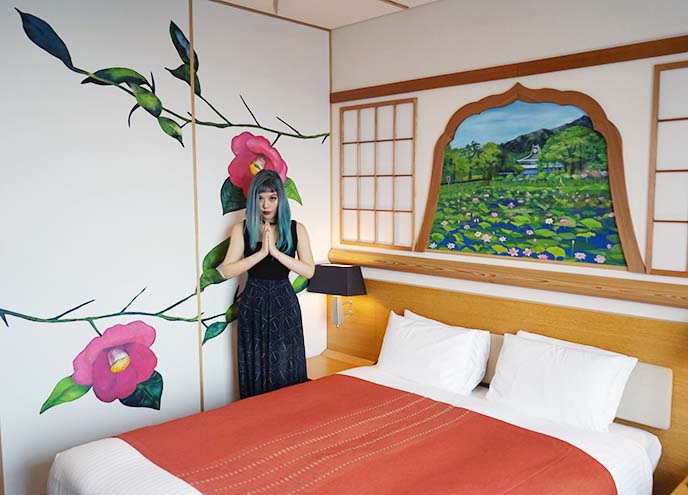
Yuka Ohtani lived in Akita prefecture (in the north of Japan), and the peaceful landscapes and lifestyle inspired her to create this room. The panels are framed with cedarwood from the region, with a view of the local moat and flowers in bloom.
She pays tribute to Akita with elegant details: a “cracked ice” pottery pattern on the ceiling, camellia flowers over faux sliding screens…
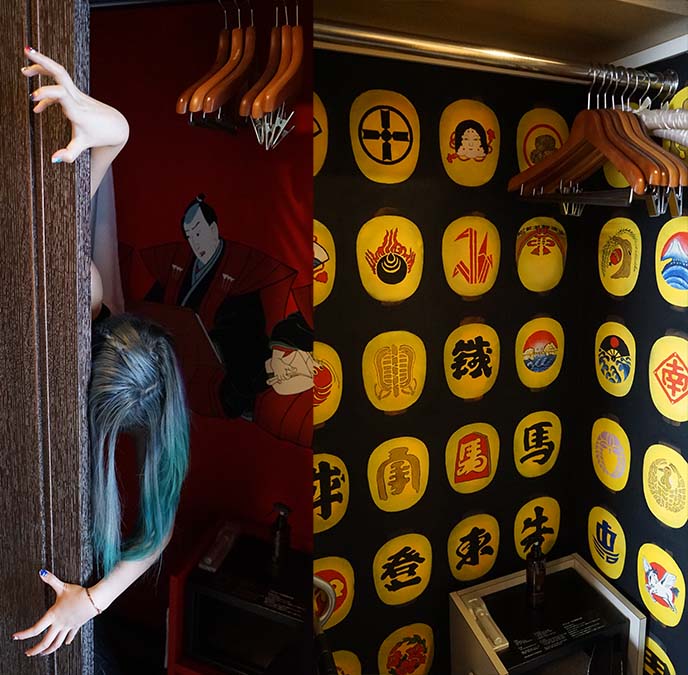
… and paintings of glowing lanterns from the Kanto festival, hidden in the closet.
(I couldn’t resist going inside and doing a Sadako impression!)
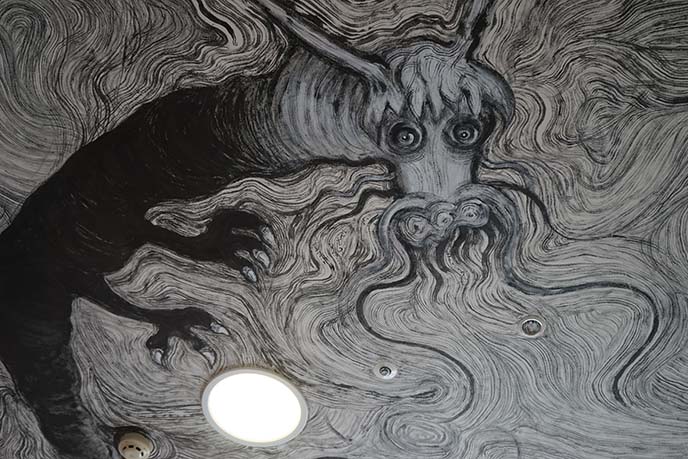
One of my personal favorites was the “12 signs of the Zodiac” room by Ryosuke Yasumoto, which was completed during his 11-day stay. His black and white animal illustrations flow through the walls, and emphasize the humorous side of the Asian folk tale.
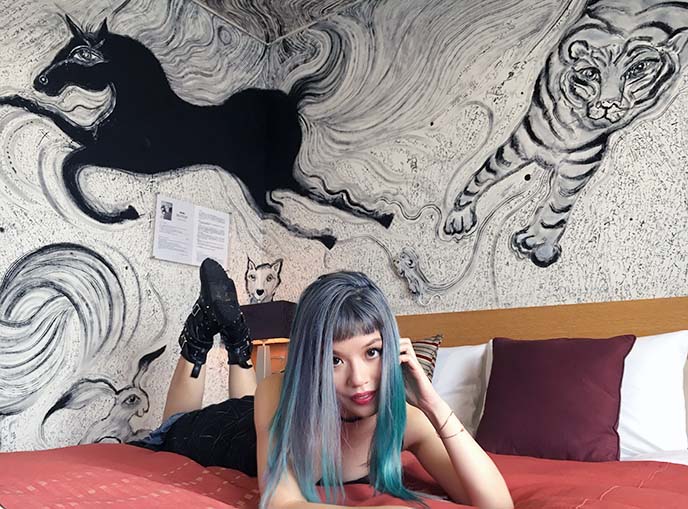
I had fun finding all the animals in the room. Ryosuke Yasumoto takes full advantage of the three-dimensional space, mounting a cat sculpture on one wall and reflecting creatures in the mirror. (The cat was left out of the legendary race, but makes a comeback here.)
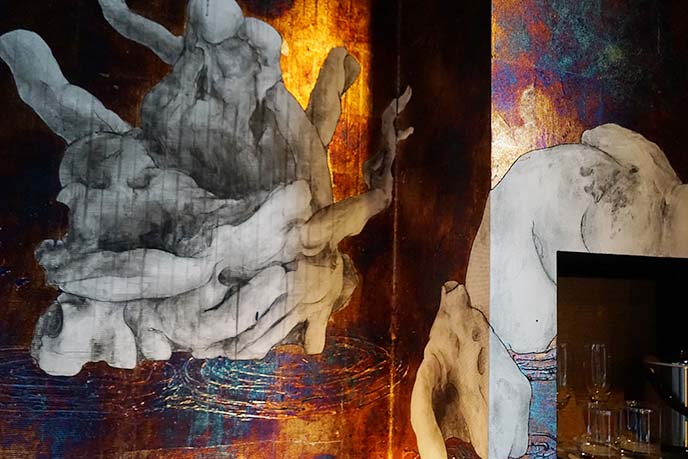
I stayed in the Wabi-Sabi room, which I recommend as it has a brilliant view of the Tokyo Tower. Artist Conami Hara created this work over four months, using silver foil to transform the walls into shimmering colors that will change over time. She painted driftwoods and ripples, inspired by the Zen stonen garden Ryoanji in Kyoto.
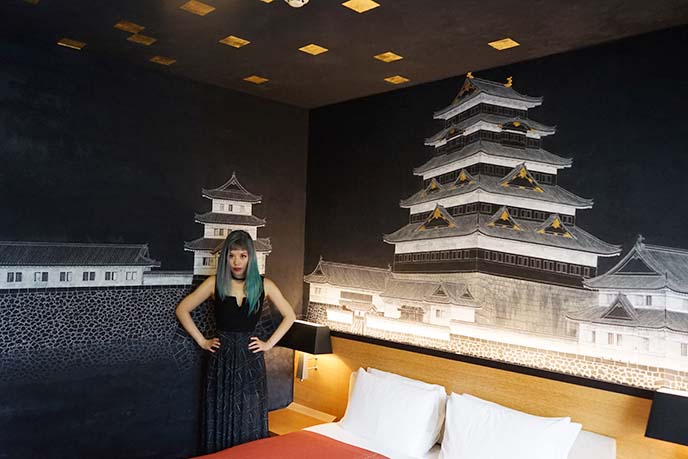
Castle by Kazuki Mizuguchi was constructed over 454 days. His transcendent vision depicts Edo Castle, which was lost in a fire, over a black background. The room entrance mimics a stone wall, and even the lampshades reflect the archtecture of the roof.
At night, a surprise appears: when you gaze in the direction of the Imperial Palace, the castle appears in a reflection on the glass.

The 25th floor harmonizes a functional lobby with natural surroundings of Japan. Looking up, the atrium soars up into a triangular prism of light.
Every morning, I came downstairs for the freshly prepared breakfast, with both continental and Japanese options. (I feasted on the gobo, hijiki, soft tofu and miso soup.)
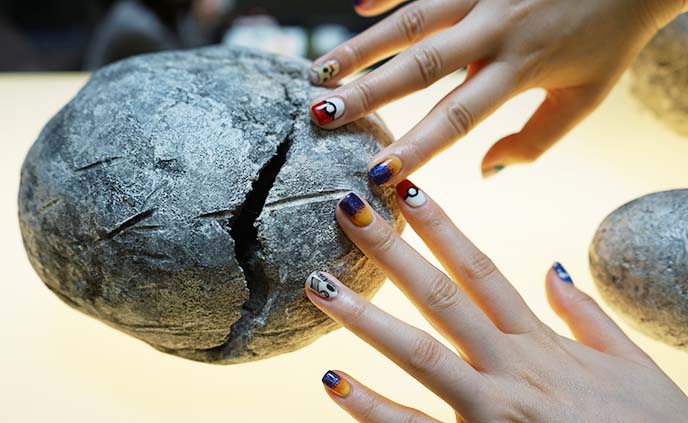
Eggs, anyone? Next to the yogurt and fruit display, I came across these alien-like sculptures. (My Pokemon Go nail art is by Glam Nail Studio in Vancouver.)

Park Hotel’s mission is summed up in “Art”: Atrium, Restaurant, Travel, and of course the artist rooms project. They succeeded in bringing Japanese aesthetics to the forefront, and made my stay feel like a cultural integration.

Park Hotel is right by Shiodome and Shimbashi train stations, and a short walk to Ginza. The location gives easy access to the major districts of Tokyo, while letting you feel as if you’re in a peaceful hideaway, up in the clouds.

John S and I had a memorable drink at The Society, the first bar in Japan to be officially recognised by The Scotch Malt Whisky Society.
These connoisseurs stock hundreds of bottles of whiskey from around the world, each with poetic names that reference the taste or feeling. Such as: “Jingling Jalapenos,” “Hospitals on Guy Fawkes night,” and “BBQ in Pine-Clad Dunes.”
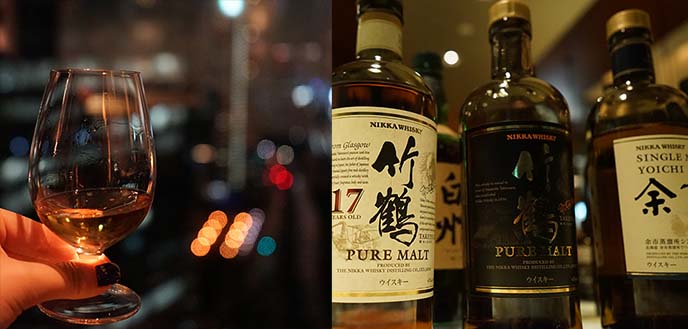
We took in the Blade Runner views from the windows, and sipped one of the bar’s finest Japanese single malt whiskeys. Prices are steep at The Society, but a tiny taste goes a long way.
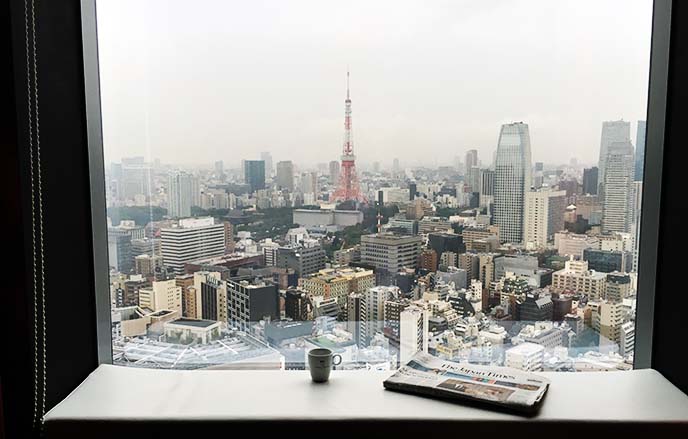
I’ll miss my mornings in my Artist Room, drinking green tea and reading The Japan Times while curled up on this sill…
Arigato Park Hotel Tokyo for a beautiful stay that immersed me into the art and history of Japan. (You can learn more about this hotel and book rooms here.)
Which is your favorite of the Artist Rooms? Doesn’t this city view remind you of the movie “Lost in Translation”? (PS: check my Instagram Stories and Snapchat @lacarmina for cute daily updates from Asia right now.)
 LA CARMINA


