Category Archive for Alternative Canada
Travel guide: Nova Scotia historic sites & museums! Road trip to Lunenburg, Shelburne, Yarmouth, Annapolis, Grand Pré.

It’s official: I love Nova Scotia! I spent July road-tripping through the Canadian Maritime province to see the top historic sites and museums — and out of all my travels, this one was an easy 5 out of 5 stars.
Photographer Joey Wong and I started in Halifax and looped south to Lunenburg, Shelburne, Yarmouth, Annapolis Royal, Grand Pré and Wolfville — with lots of stops for seafood and scenic views along the way.
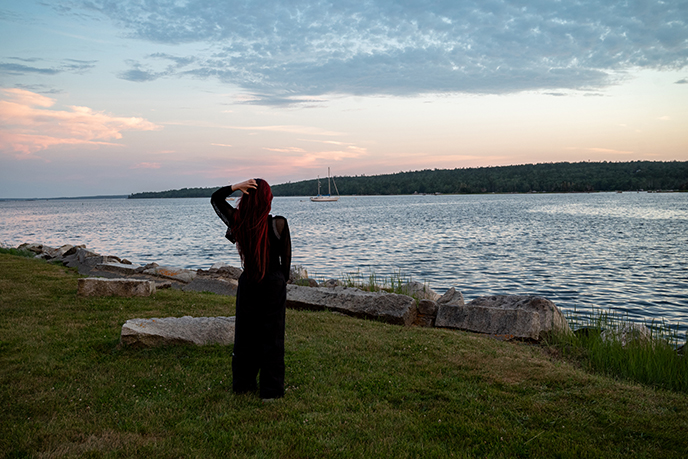
There were so many standout moments from our NS trip, like this sunset at Shelburne, but we’ll never forget the genuinely friendly and down-home people we met along the way. (It felt like going back in time to the happy 1990s, the best era that ever was!)
Read on for our travel guide and itinerary to Nova Scotia‘s best heritage attractions (including quirky museums and UNESCO sites), and see my reel for video footage of each of these places.

From Halifax, we drove about an hour southwest to Old Town Lunenburg. Founded in 1753, this British settlement is filled with beautifully preserved historic architecture.
I’m giving the devil horns in front of St. John’s Anglican Church, a large black and white Gothic landmark in the center of town.
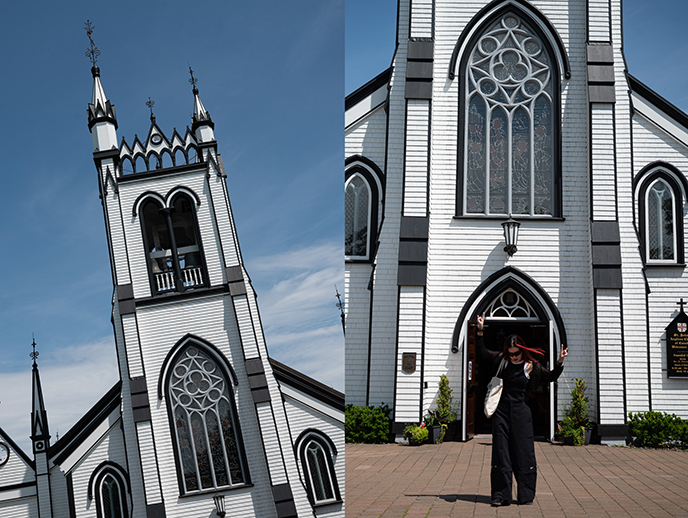
Fun fact: one Halloween night, not too long ago, the original church mysteriously burned down! To this day, locals have no idea who set the Goth church on fire on October 31st… but there are theories…
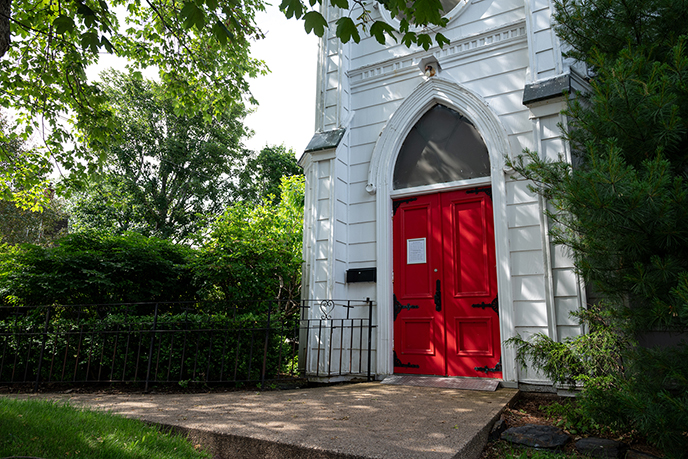
We took a guided walking tour through Lunenburg, which was a great introduction to the South Shore. The charming town was one of the first Protestant British settlements in Canada.
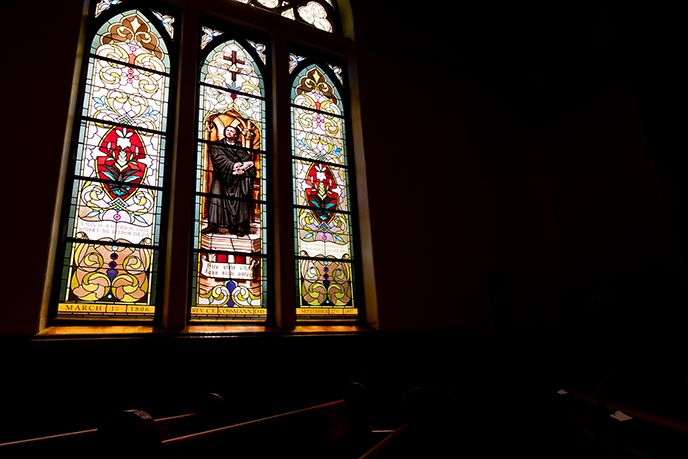
In 1995, Lunenburg became a UNESCO World Heritage Site, noted for its fine examples of 1800s wooden architecture. Another fun fact: many houses were built with identical-looking front and back doors to confuse the Devil, who only entered through the back (which is not surprising!)
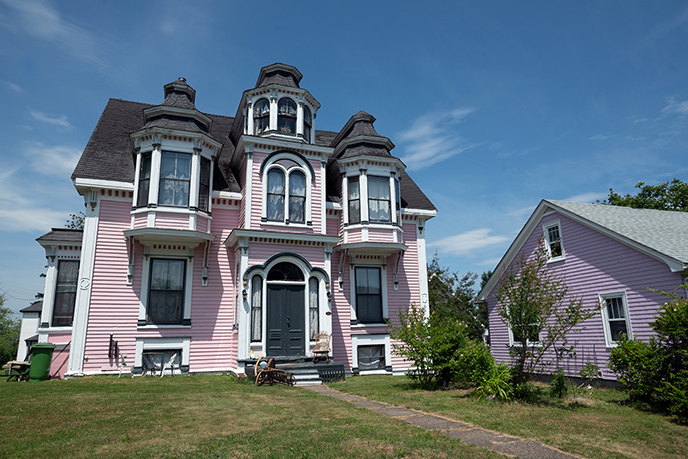
Here’s the “wedding cake house,” a pink home built in 1888 that is apparently haunted (it does look straight out of a horror film.)
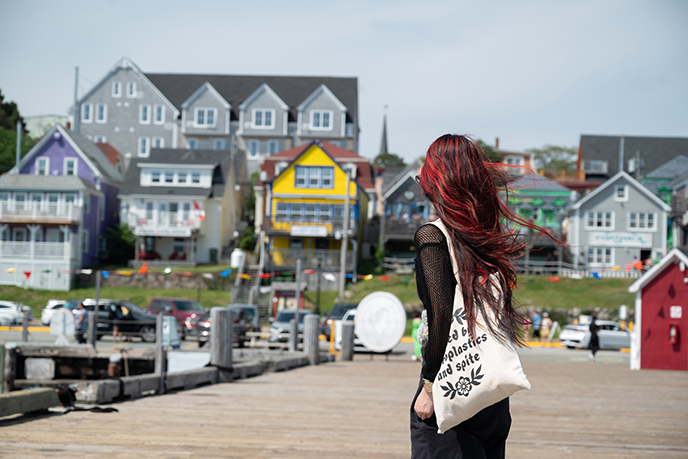
The tour ended at the Lunenburg Waterfront Marina, which was once a buzzing center of the Atlantic Canada fishing industry.
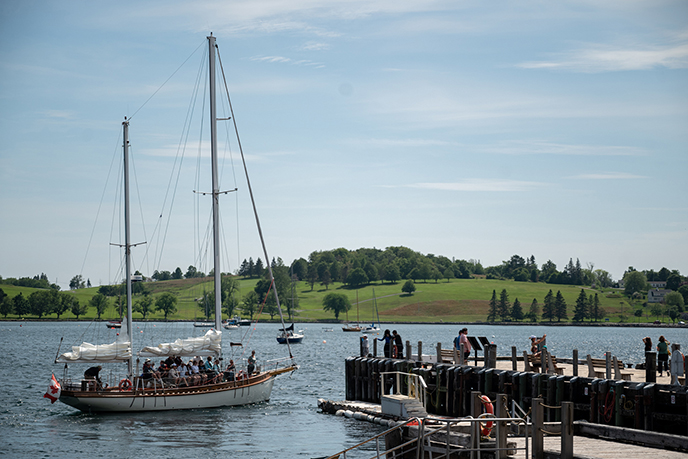
The original Bluenose racing and fishing schooner was also built at Lunenburg in 1921 (the ship was a Canadian icon until it was wrecked in 1946).
The Bluenose’s legacy is remembered through a Bluenose II replica ship, and is engraved on the back of the Canadian dime.
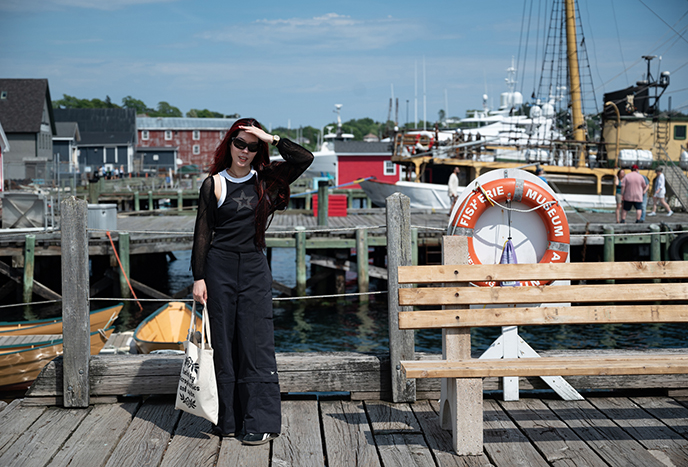
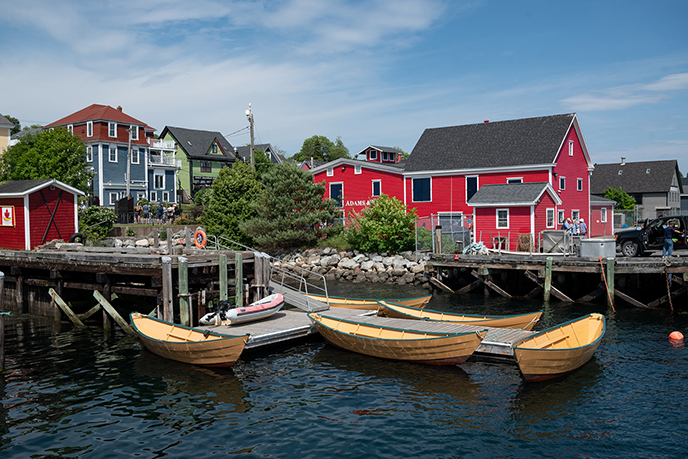
Loved strolling the waterfront marina and soaking in the seafaring history.
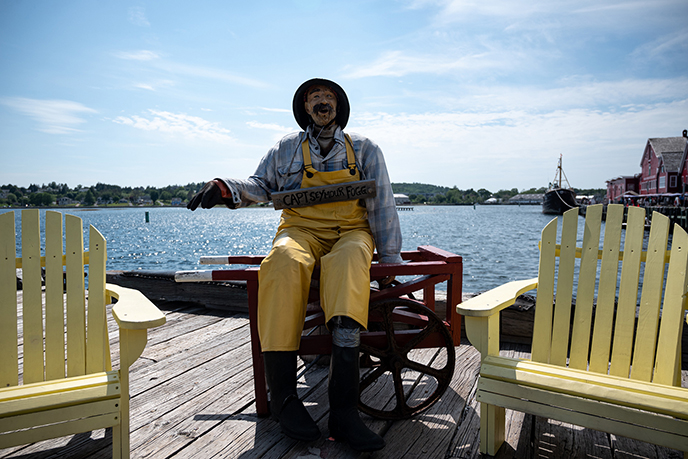
This classic fisherman scene made me think of the song: “I’s the b’ye that builds the boat / And I’s the b’ye that sails her / I’s the b’ye that catches the fish / And brings ’em home to Lizer!”
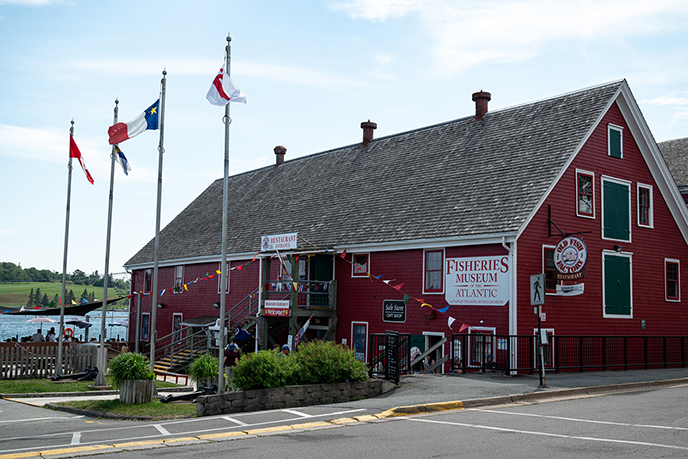
The Fisheries Museum of the Atlantic lets you learn more about the town’s fishing heyday.
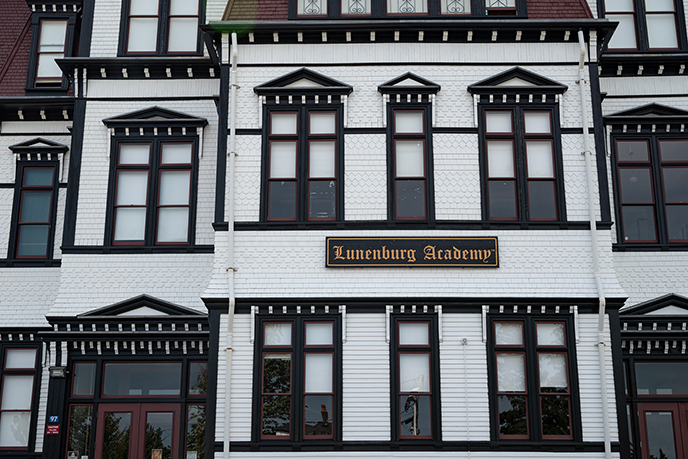
Another classic Victorian building: the late 19th century three story wooden Lunenburg Academy.
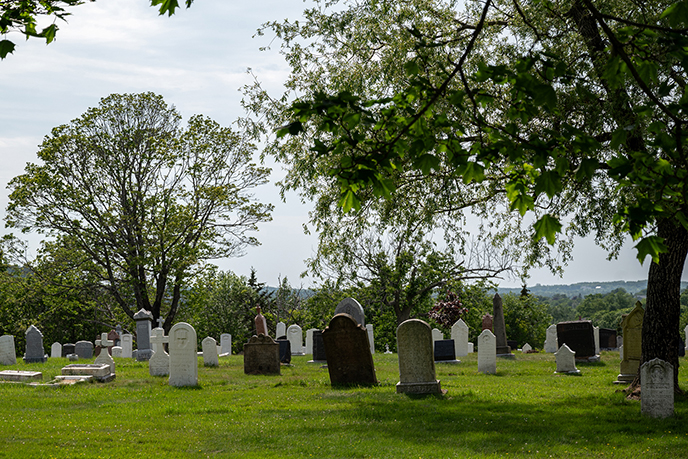
This Goth loves a haunted graveyard… You can take a ghost walking tour of Lunenburg at night as well to hear spooky tales.
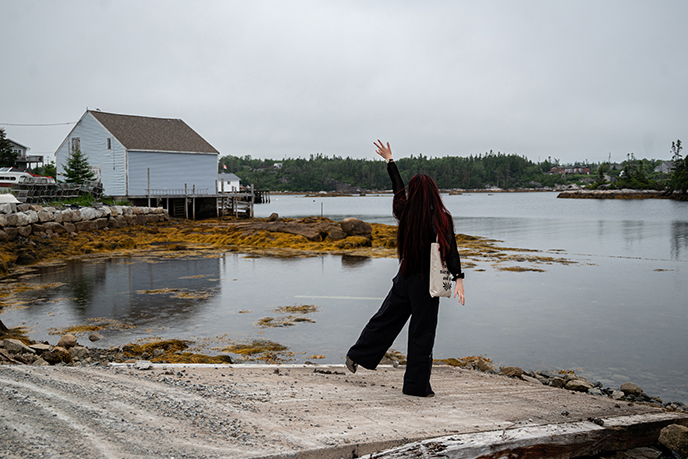
Pit stop at 19th century fishing village Peggy’s Cove. Photographer Joey Wong captured these photos from the deck by Shaw’s Landing restaurant, which is one of the province’s top seafood joints.
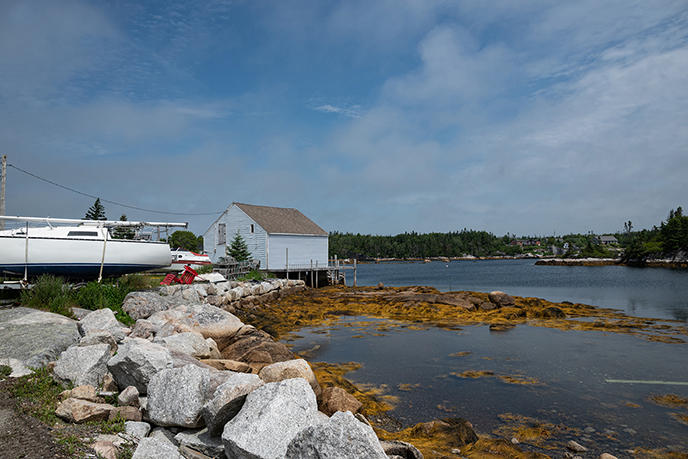
With fishing shacks and marine landscapes like this, it’s no surprise that Nova Scotia rocks when it comes to fish (like haddock), lobster, Digby scallops, and other seafood.
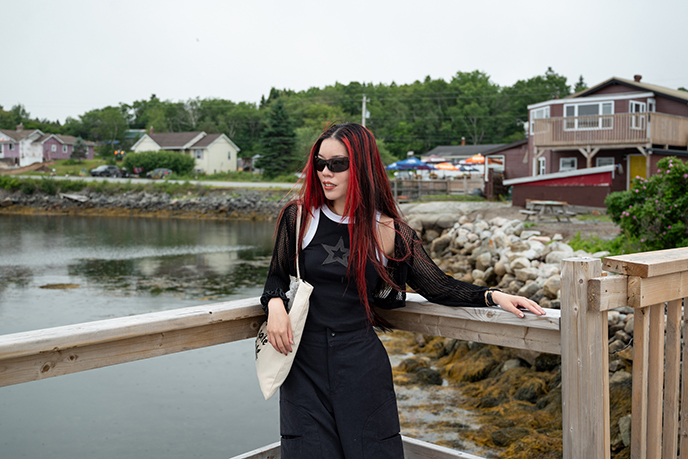
My Y2K outfit matches the chill, welcoming vibe of Nova Scotia that reminded us of the late 90s! (If only we could time-travel back then.)
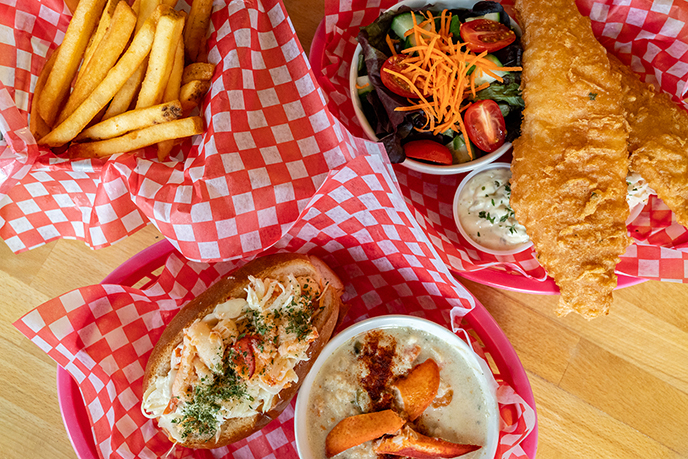
At Shaw’s Landing, we devoured affordable lobster rolls, fish and chips, chowder, scallops and other marine cuisine. Believe me, Nova Scotian seafood lives up to its rep.

We found it relaxing to drive around the province (the roads are easy), and it let us take in the picturesque fishing villages, lighthouses and Atlantic coast landscapes along the way.
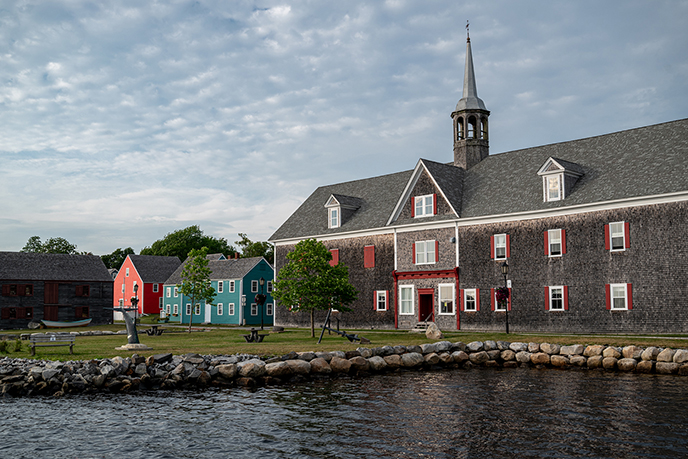
We drove an hour and a half southwest and were in Shelburne — a picture-perfect port town that immediately stole my heart.
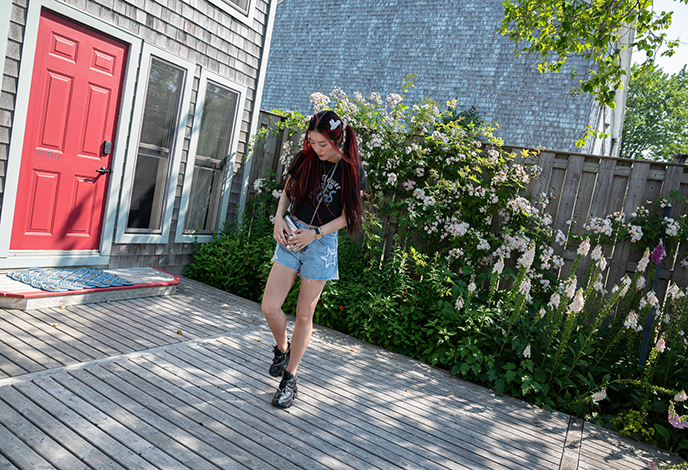
The 18th century Loyalist town is a photographer’s dream, and is still untouched by mass tourism — so you’ll get a chill, commercial-free experience. Everything is centered around the waterfront and easily accessible.
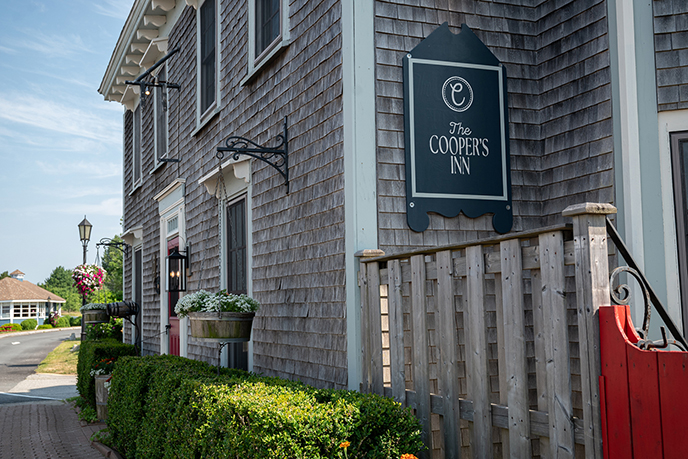
Stay at Amanda’s The Cooper’s Inn, a charming historic B&B with personalized hospitality. We loved chatting with her and getting to know her story (she moved here to escape the big city chaos, and adores the slower pace and peace of Shelburne).
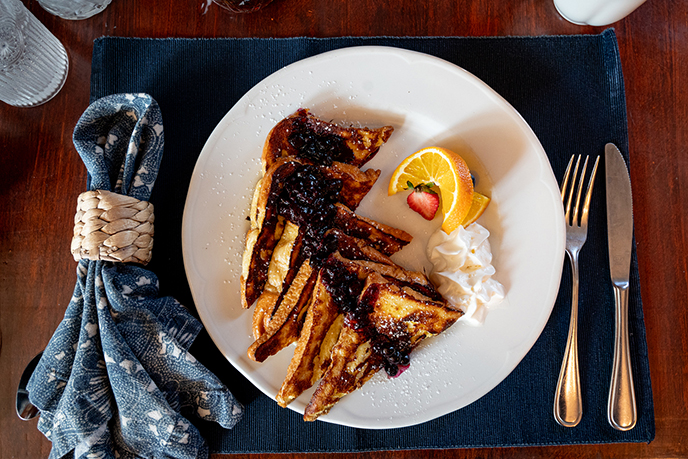
Can’t get over how kind and welcoming Nova Scotians are. And the food is outstanding everywhere — here’s the French toast that Amanda makes fresh for her guests.
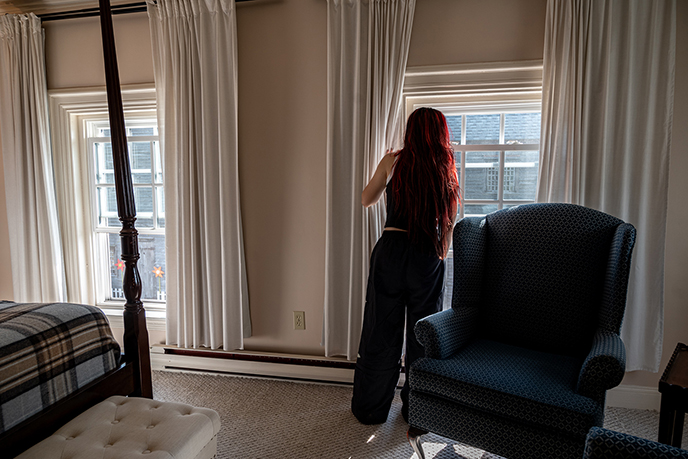
Cooper’s Inn is a boutique bed and breakfast with windows overlooking the seaside, and all the amenities you can think of for a luxurious, cozy stay.
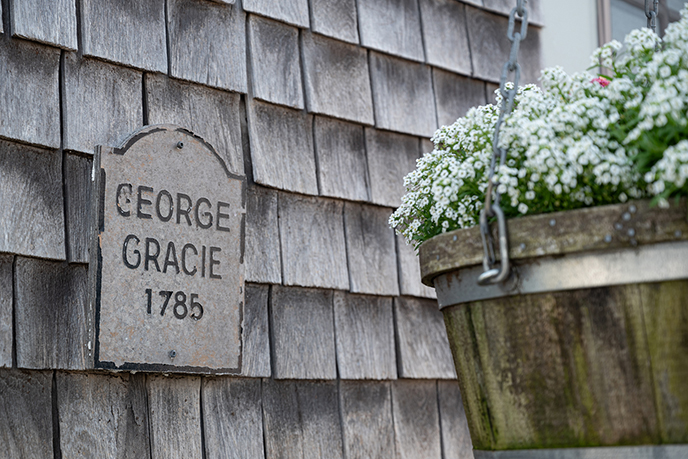
A tribute to the original owner, George Gracie. If there are ghosts in this inn, they’re friendly ones for sure!
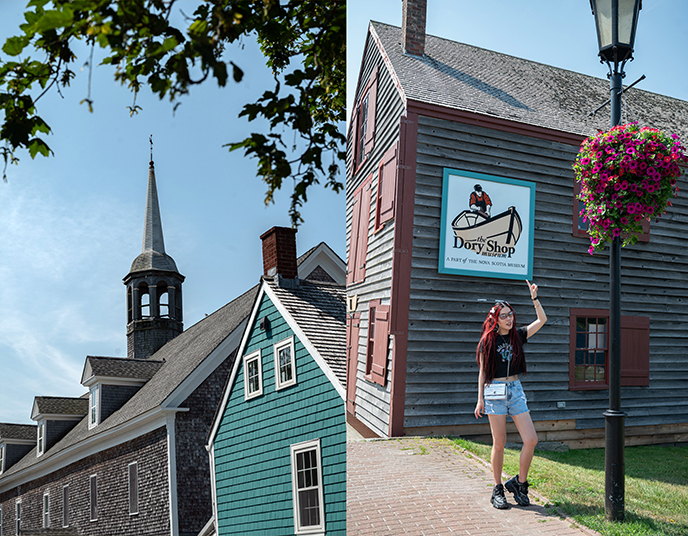
The main area, Dock Street, borders Shelburne Harbour. Here, you’ll find historic buildings and attractions like The Dory Shop Museum. Set in a building dating from 1865, it celebrates the classic wooden boats built here by hand.
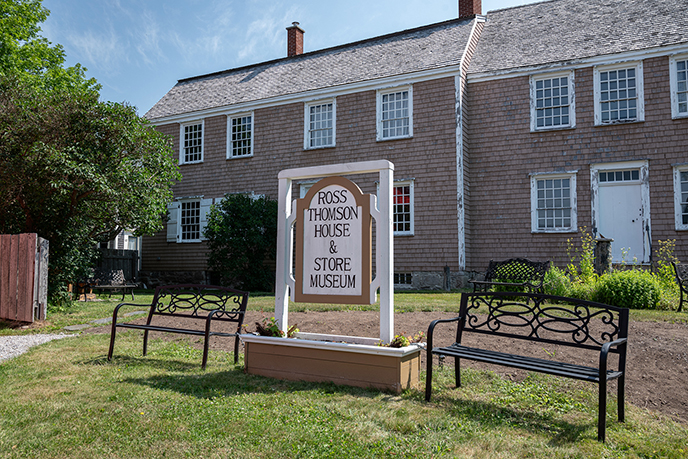
The Ross-Thomson House & Store Museum lets you get immersed in the 18th century life of two Scottish families that settled here.
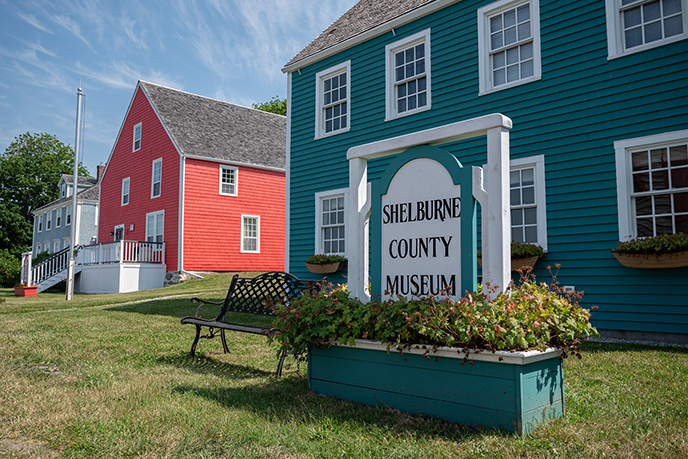
Then, learn about local history at the Shelburne County Museum, starting from the arrival of the Loyalists in the 1780s.
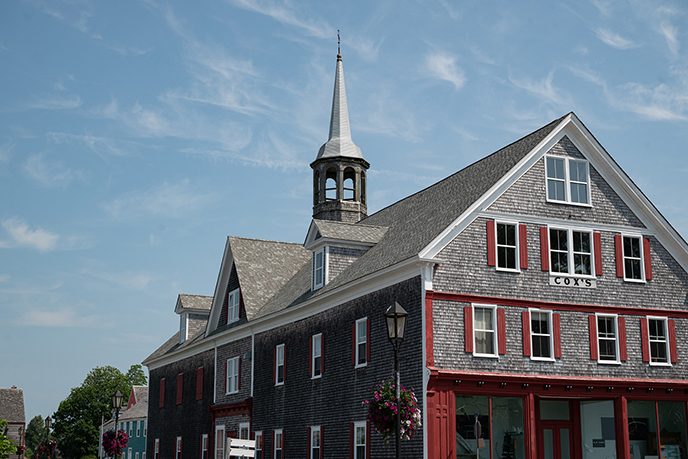
In the next post, I’ll do a full run-though of the restaurants we recommend throughout Nova Scotia — as there were so many highlights.
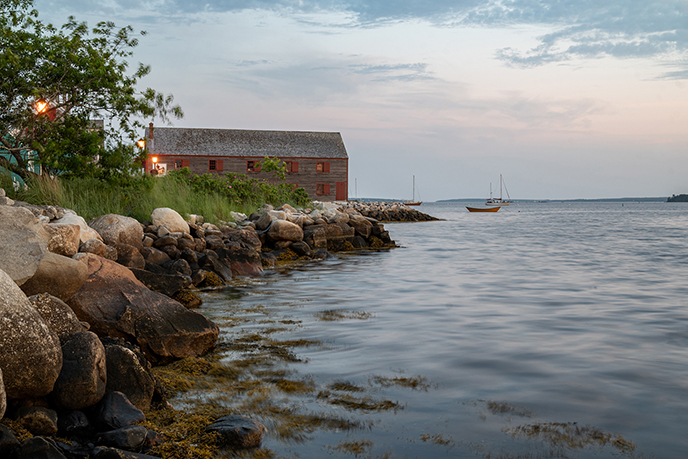
The fabulous pink sunsets at Shelburne’s 18th century waterfront are unforgettable.
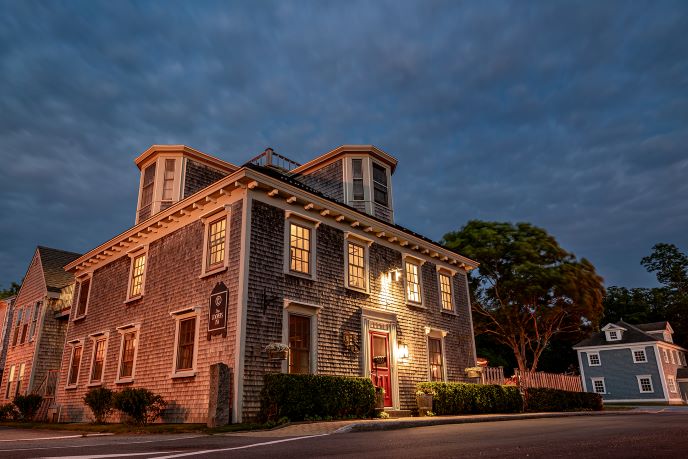
The Cooper’s Inn glows at night. Shelburne is a photographer’s delight. (All images by Joey Wong)
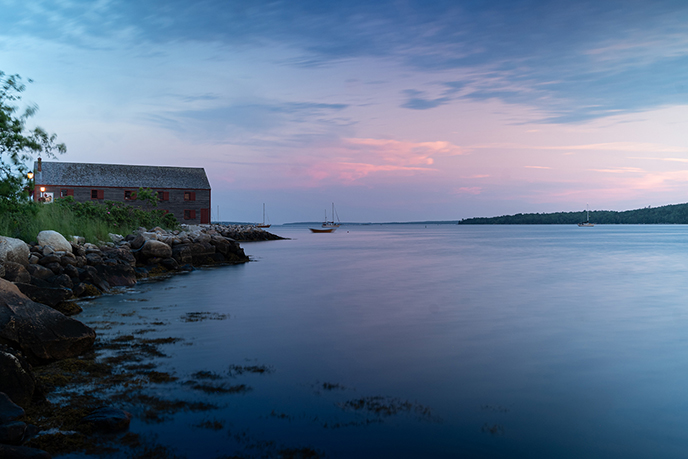
Check out the Discover Shelburne County site for more info on planning a trip here — a must if you’re coming to the province.
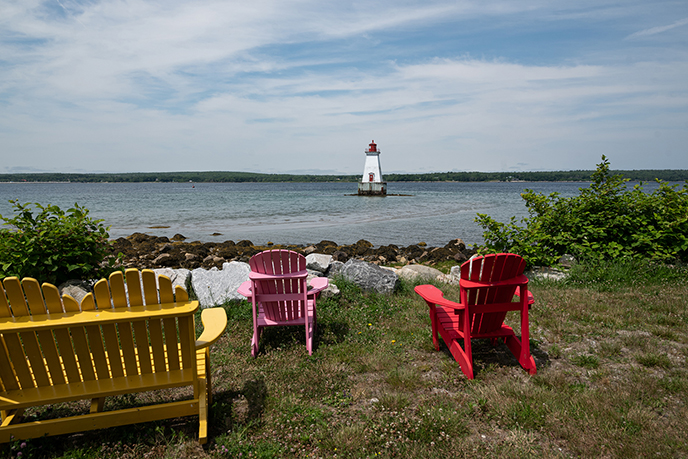
We did a detour to the nearby Sandy Point Lighthouse, a highly Instagrammable historic site. Nova Scotia has many adorable red and white lighthouses that add to the classic Maritimes feel. (We also stopped by the tall Cape Forchu, but foggy weather conditions didn’t make for good photos.)
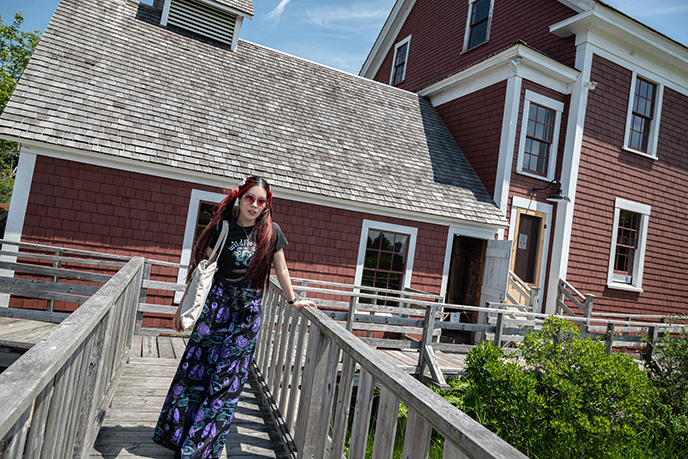
Nova Scotia’s specialty museums are well worth the visit for an intriguing look at the past. At Barrington Woolen Mill, I saw how river-powered turbines turned fleece to cloth in the late 19th century.
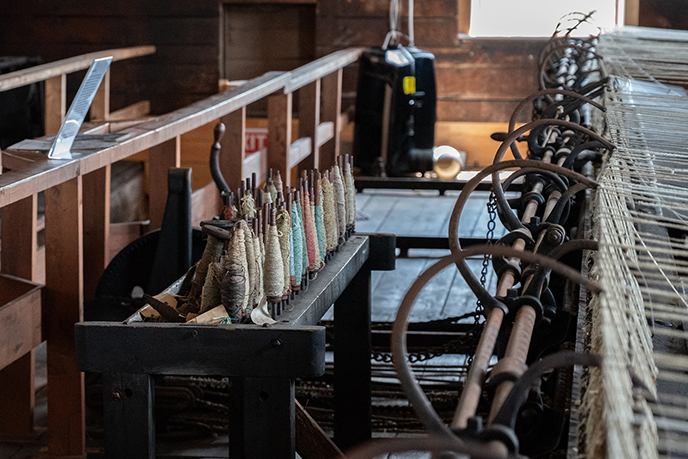
Watch my reel about Nova Scotian museums for footage from the mill and the other historic places covered in this blog. It was an important local business that used ingenious water-powered machinery to spin cloth.
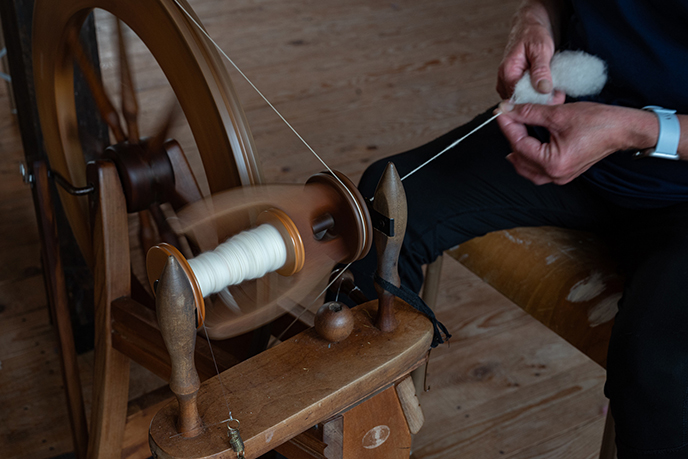
Visitors can learn how to use a spinning wheel straight out of Sleeping Beauty, as well as other old-timey activities like soap-making.
In The Collapse era, it’s more important than ever to recall the history of slavery and never-ending fight for freedom.
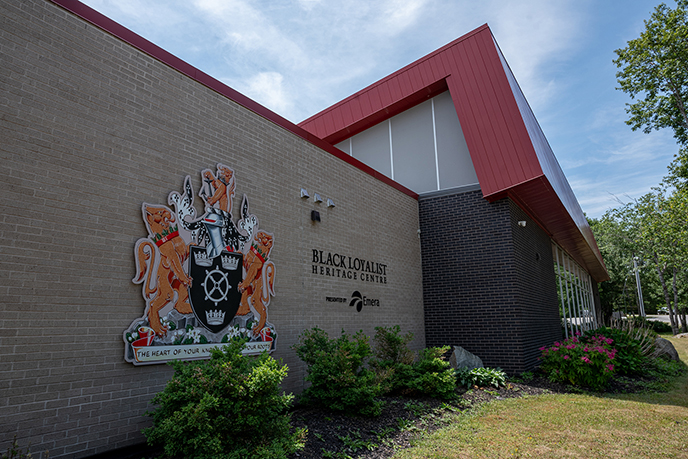
At the Black Loyalist Heritage Centre & Society in Birchtown, Nova Scotia, I learned about the largest free Black settlement in North America (founded 1783).
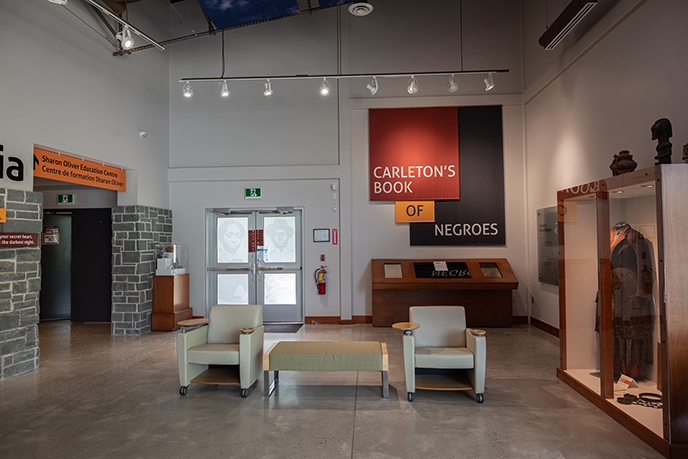
An arsonist destroyed a large number of its archives in 2006, but the Black Loyalist museum meticulously maintains its history through displays of period clothing, broken shackles, and documents relating to the immigration of African Americans to Nova Scotia.
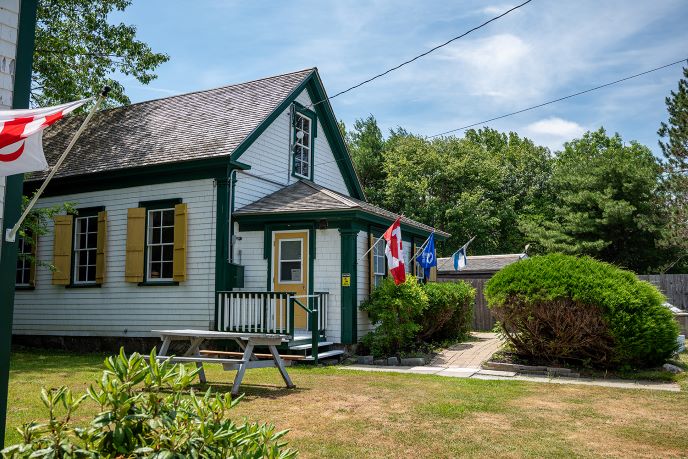
The Birchtown Schoolhouse is a one-room school from the 1800s that was run by the community.
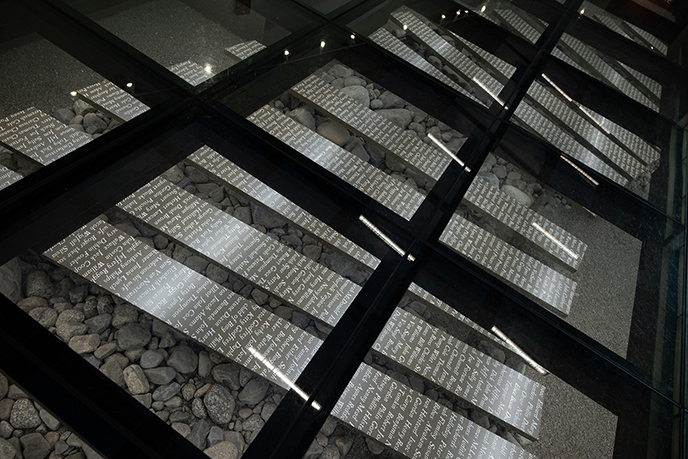
The museum is well-designed, and the glass floor holds an Archaeological Pit with artifacts and the engraved names of former slaves.
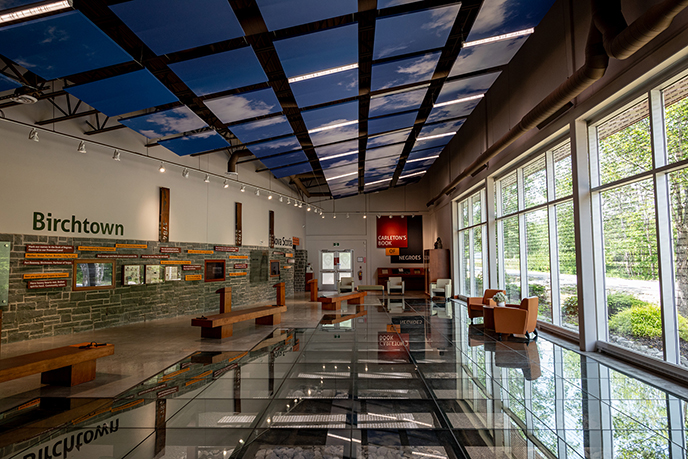
The interactive exhibitions recall how Black Loyalists came together in Birchtown to overcome innumerable challenges, and the importance of continuing this work today.
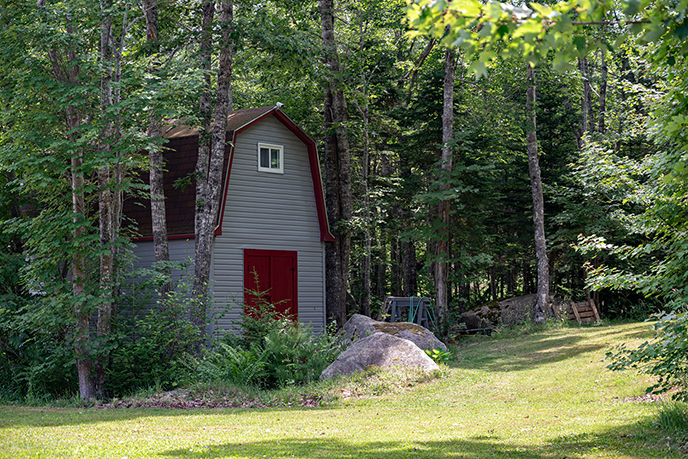
Museums are vital if we want to remember our past and not repeat mistakes — and Nova Scotia is doing its part through vivid cultural attractions like these.
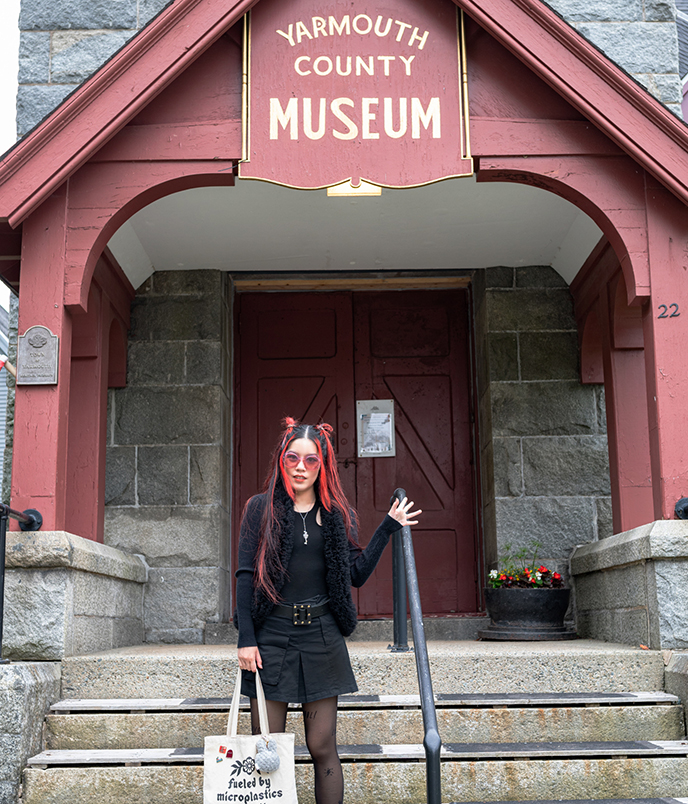
We continued our loop around the province to Yarmouth, an hour away (Nova Scotia is ideal for road trips with easy driving conditions and short distances between spots). I’m fueled by microplastics in front of Yarmouth County Museum & Archives, filled with 20,000 fascinating artifacts from the town.
My black square belt is by The Plain Circle Vintage — upcycled leather all the way. No plastics here, and I’m all about the Y2K style of the belt that Jennyfer sourced (she has lots of curated Goth-friendly vintage on her site).
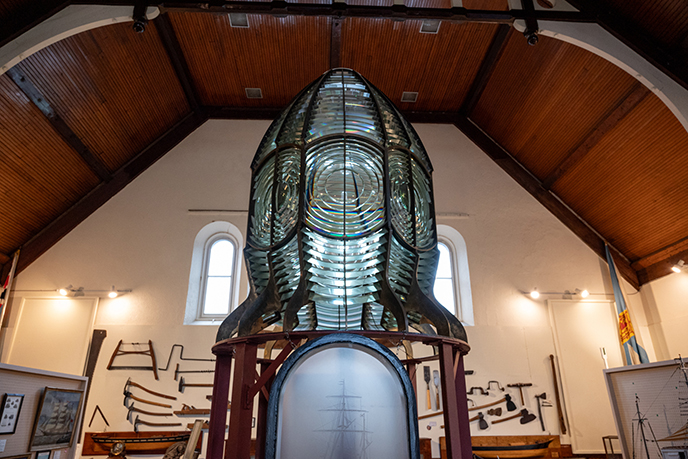
Yarmouth County Museum is a treasure trove for oddities like Cape Forchu’s former lighthouse lens, which floated in mercury (the microplastics of that era!)
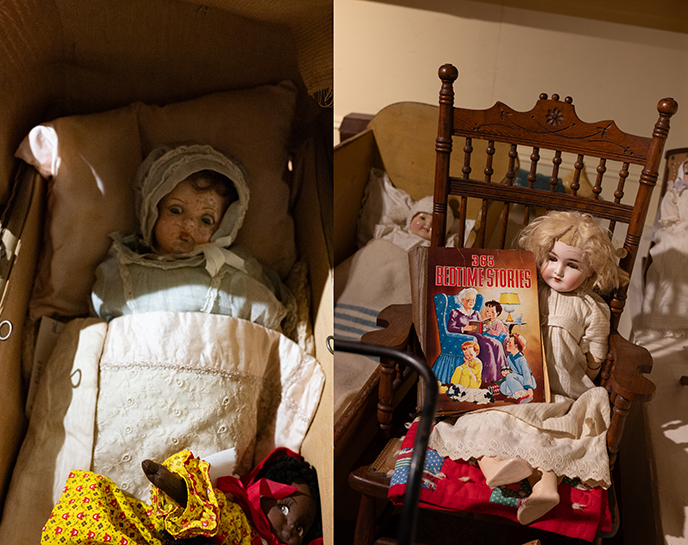
Potentially haunted dolls, questionable medical devices and other funky historic remnants kept us amused as we went from room to room.
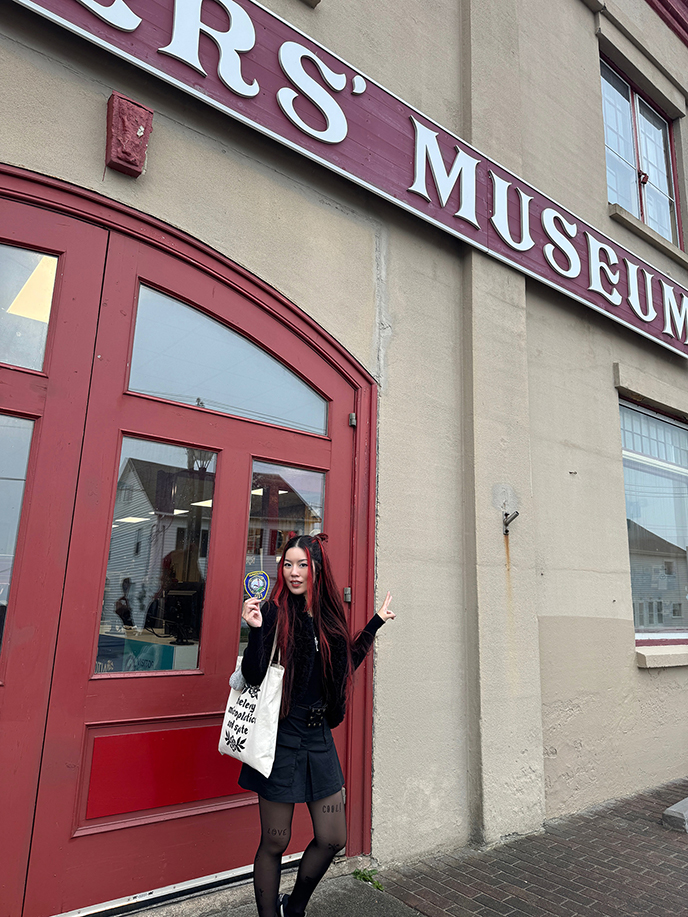
Yarmouth’s little niche museums are all within walking distance of each other. The Firefighters’ Museum of Nova Scotia fascinated me with its firefighting archives…

… especially the steampunk-y fire engines from the 1800s to 1930s. Watch out if you see me steering this big truck!
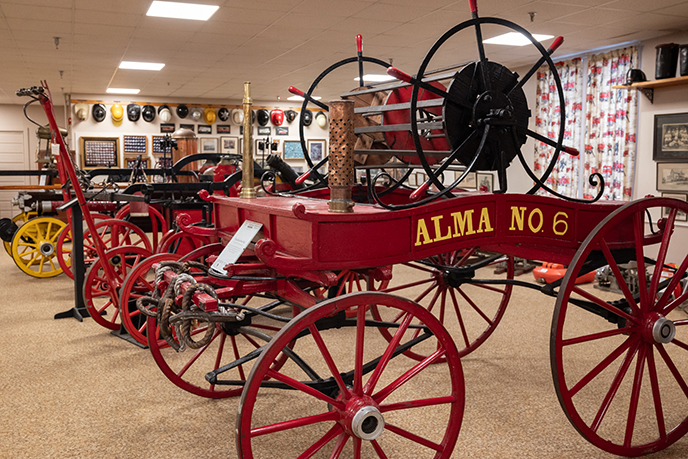
Wild to see the evolution of fire engines, from these wood and metal hand trucks to steam-powered colossuses.

Firefighters from around the world added their patches to the display (I was tickled to see an “Emo department” one!)
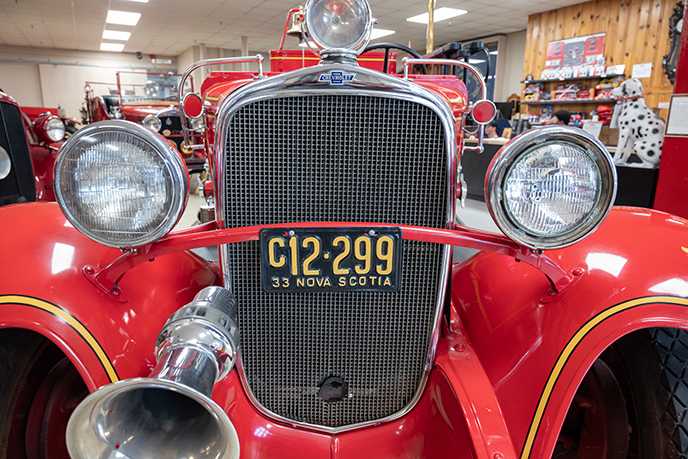
Watch my IG reel here to see me goofing around this museum and others.
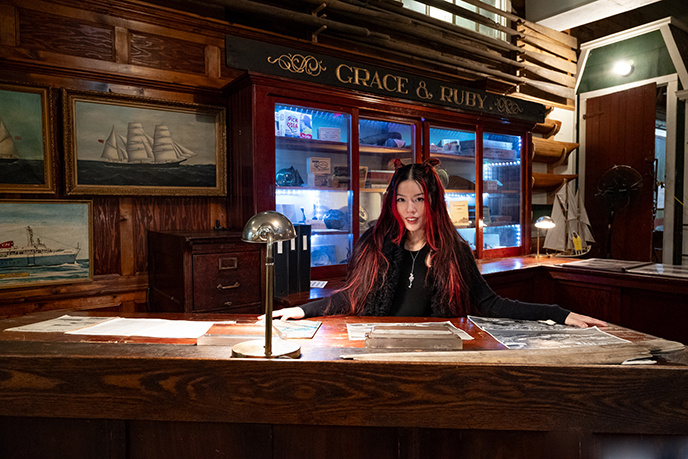
W. Laurence Sweeney Fisheries Museum took us back to Yarmouth’s fishing heyday through reproduced waterfront buildings and trawlers, yarrrr.
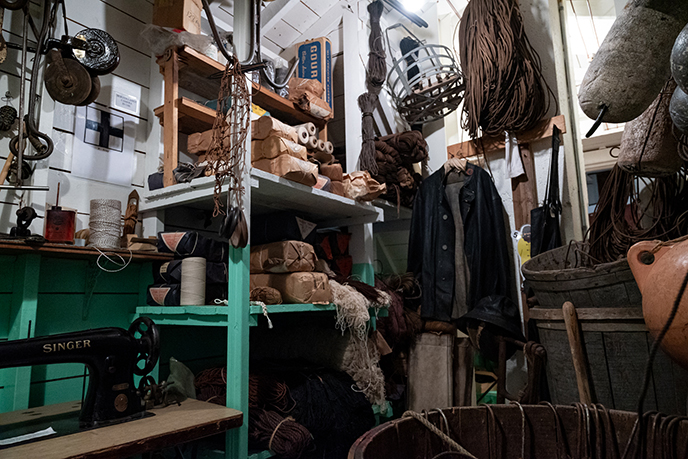
The museum houses artifacts from companies owned by Sweeney as well as scaled-down boats and buildings from the early 1900s.
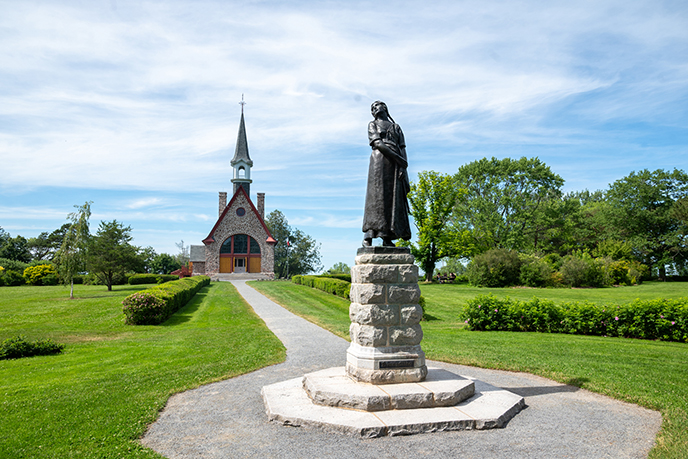
We kept driving northeast to Grand-Pré National Historic Site, which remembers the Acadian settlement and 18th century deportation. This powerful statue is of Evangeline, an Acadian icon of resilience during the Great Upheaval (when the British sent French-speaking Acadian settlers into exile).
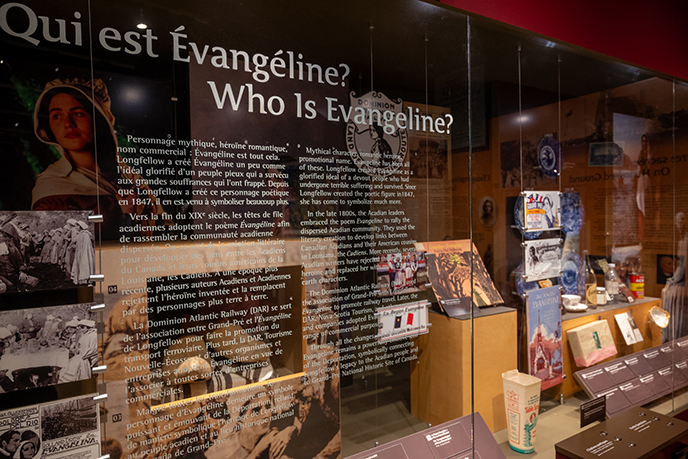
The exhibits tell the tale of Evangeline, the protagonist of a poem written by Henry Wadsworth Longfellow in 1847.
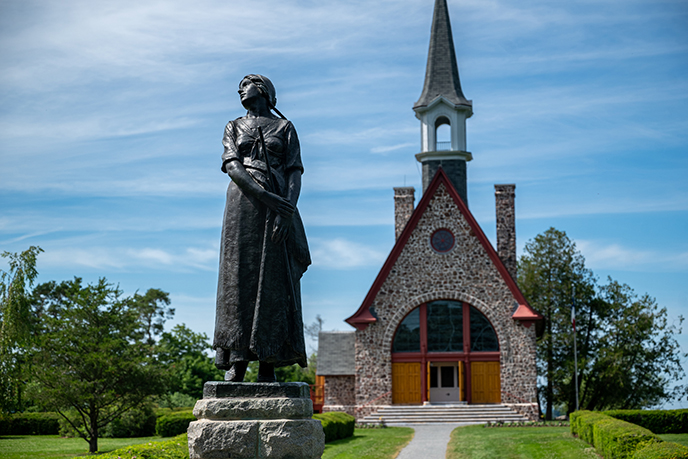
As she and her lover were separated by the deportation, Evangeline has become an a symbol of strength and perseverance.
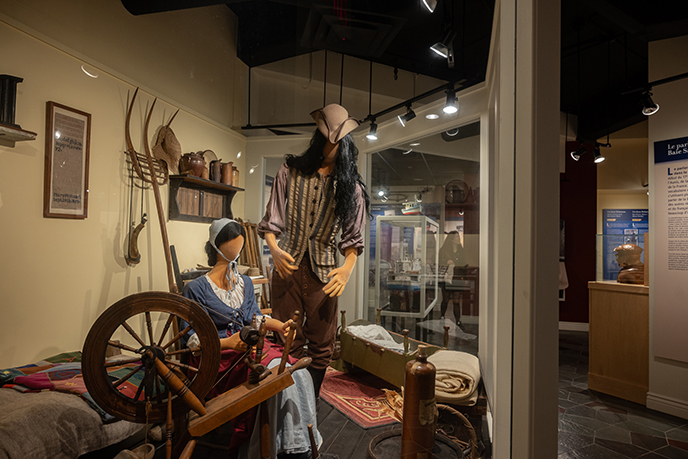
We learned more about Acadian culture at Rendez-vous de la Baie, an educational center in Baie Sainte-Marie. Fun fact: instead of saying “ouch,” Acadians would yell “AYOYE” (pronounced ah-yoy)!
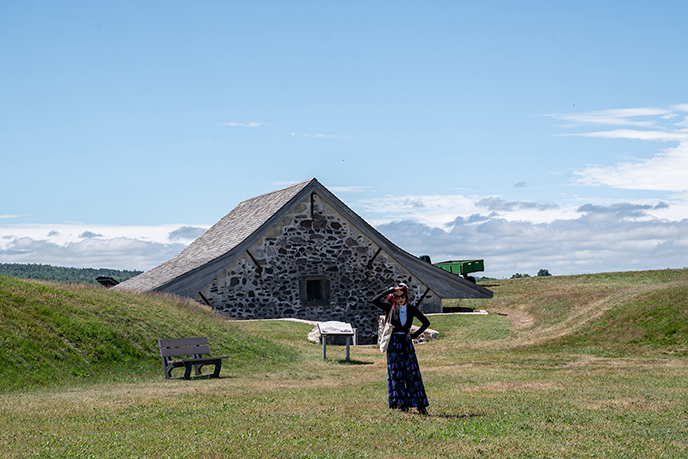
Before returning to Halifax, you’ve got to swing by Fort Anne National Historic Site in Annapolis Royal. The scenery reminded us a bit of our time on Easter Island.
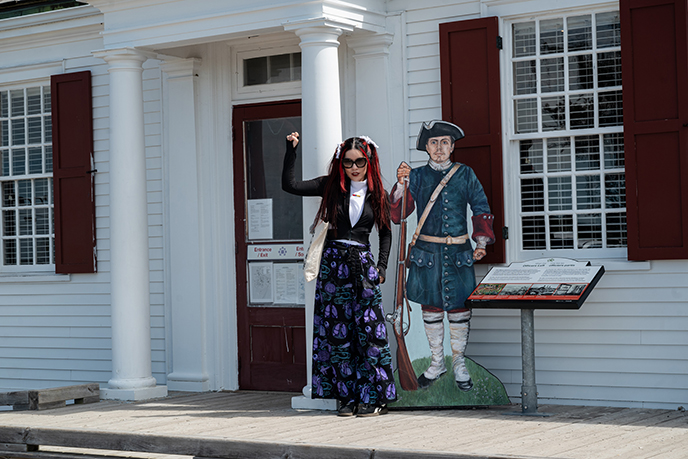
Fort Anne was built by Scottish settlers in 1629, making it the oldest fort still standing in Canada.
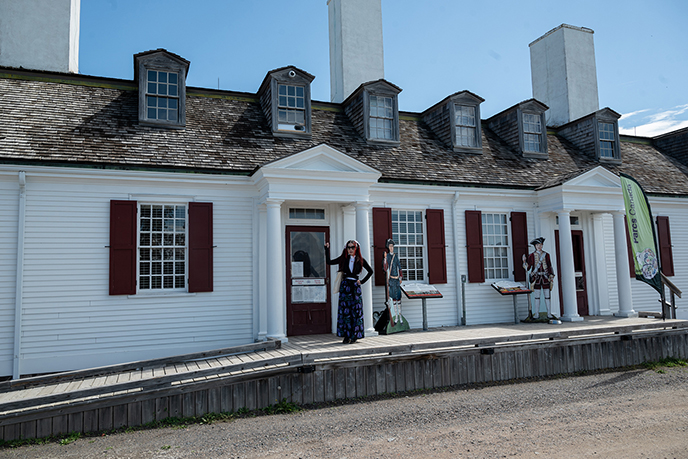
I’ll be showing you Halifax’s museums and historic destinations in an upcoming blog post, so stay tuned for that. Until then, you can see my reel about Halifax history sites.

This triangle is the oldest military building in Canada, a powder magazine from 1708 designed to keep gunpowder dry.

Fort Anne (formerly Charles Fort) was built in Annapolis Royal as this was the center of the early British and French settlements.
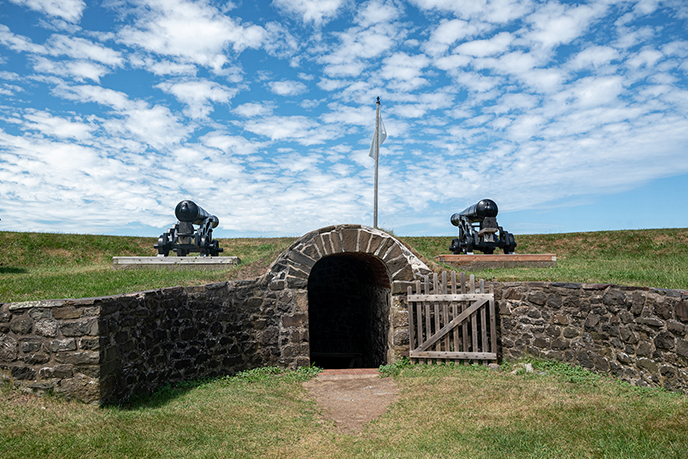
Throwback to the days when warfare involved canons, thigh high boots and tricorn hats.
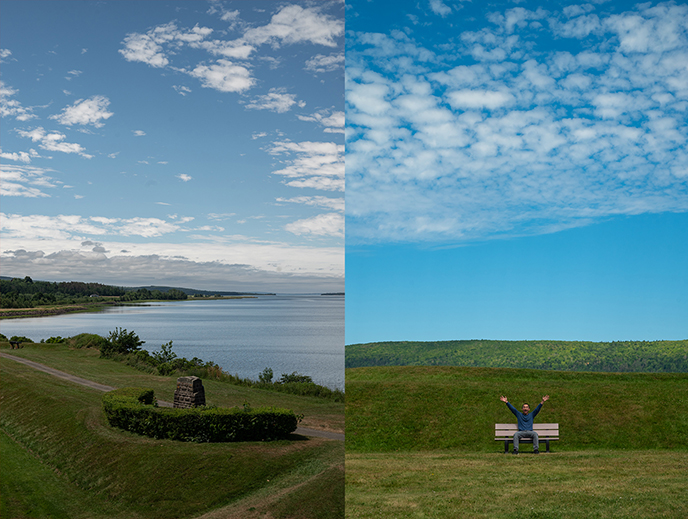
The Annapolis and Allain rivers come together at this spectacular site. Photographer Joey Wong and I can’t thank Visit Nova Scotia and HMI Creator Coast enough for making this journey possible!

In a time when many destinations are pricy and over-touristy (and I’m avoiding going to the US), it was a relief to travel in Nova Scotia and relax in small, friendly Maritime towns. Wouldn’t you like to hang here with me?
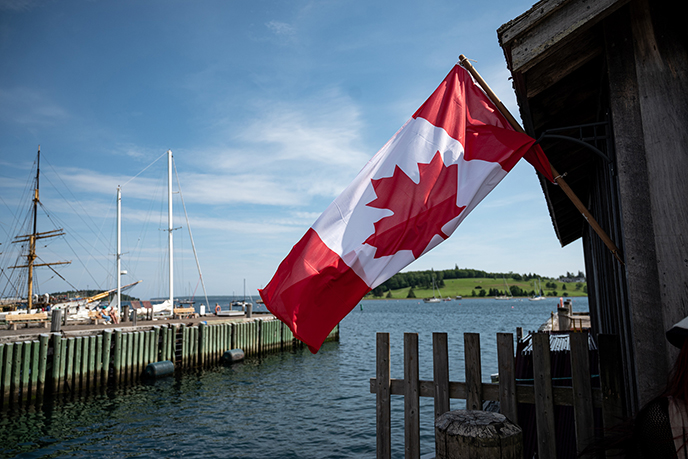
I think you can tell that we had the best time road-tripping around this ocean playground! Check out Nova Scotia’s website for everything you need to plan a trip to the province.
For video footage of all these Nova Scotian sites, enjoy my reel here — and see more snaps on IG @lacarmina. Next up, I’ll feature Halifax’s museums and historic destinations, as well as all the outstanding food I enjoyed on this trip!
SHARE & COMMENT
Fashion blogger influencer apartment tour! Japanese mid-century modern Miffy, space age furniture, kawaii home decor.

Welcome to my home! At long last, I can unveil my La Carmina apartment redecoration project — I redesigned the space and brought in new pieces for a mid-century modern meets Miffy and Japanese Zen vibe!

Read on for all the details of my apartment interior decor, including the scoop on the various pieces and where I got them (many are from my travels around the world).
And I’ll be sharing plenty of fashion blogger home content on my social media, so follow along @lacarmina — starting with this IG reel that gives you a peek inside my living space!
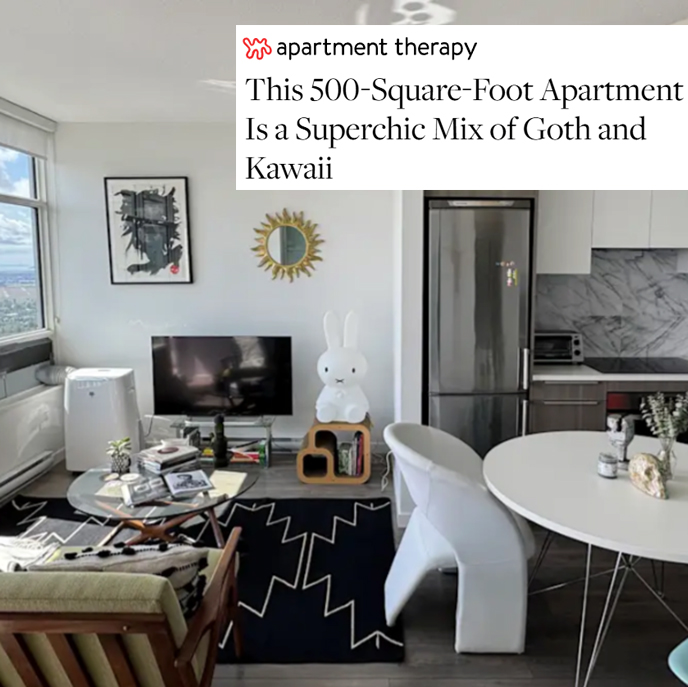
Update: my mid century modern interior design was featured in Apartment Therapy and Yahoo! See these links for La Carmina’s home tour, which includes stories about my decor inspiration and how I sourced these unique pieces like the Miffy lamp, sun mirror and Brutalist road runner sculpture!

As you can see, Miffy the Dutch bunny — my fav mascot — features prominently. Created by Dick Bruna as a children’s book character, Miffy (or Nijntje) is a minimalist design from the mid twentieth century (she debuted in 1955), which fits with my MCM aesthetic.
Above: Maison Deux Miffy wool rug and throw blanket, and Mr Maria XL Miffy lamp.

Washi paper lamps also let me add a touch of Japan minimalism to the space. My Havenly floor lantern provides gentle ambient light through its rice paper shade — I love Havenly’s selection of lamps and other modern design objects.

I removed plastic elements from my space (you know I’m fighting the war on microplastics!) and added in quality furniture made from natural materials to last a lifetime. Behold my Mobital Quasar table with pentagram-like legs, made from stained walnut ashwood and glass! (Check out my visit to Mobital’s showroom to see more of their stylish pieces.)

As you can see, my apartment design puts my personal kawaii (cute Japan) spin on Mid-Century Modern. I’ve long admired the mid-20th century design movement, which emphasizes organic / geometric forms and modernist clean lines. I chose a classic MCM color scheme for the space: tangerine orange, aqua (light turquoise or teal), and avocado green. I looked for furnishings reminiscent of this era, mostly made with steel wire, paper and wood.

If you’re thinking that my home doesn’t look very Goth… then look closer! I didn’t want to clutter my space with plastic Halloween-y decor, or anything too dark (as that can make my tiny apt look even smaller). Rather, I added Gothic accents like this Anatomica book by Joanna Ebenstein, and a pentagram coaster from Kobe’s Satanic Idea bar. (The wood legs of my Mobital Quasar table also look quite like the points of a pentacle!)

My high-rise one bedroom apartment in Vancouver has giant windows and a balcony, which bring in lots of natural light to make the small space seem larger. The living and dining / kitchen spaces flow into each other to increase the sense of openness — and a UFO-like paper lamp by Vin Lighting floats from the high ceiling.

Anyone who loves contemporary design knows the name Herman Miller. The American furniture manufacturer rose to fame during the 1940s-60s, producing iconic pieces such as the Aeron chair, Noguchi table, Marshmallow sofa, and Nelson bench. Today, they remain the leaders in modernist, experimental home furnishings.
I have two Eames molded side chairs — one of most famous seats manufactured by Herman Miller, and created by Charles and Ray Eames — in Aqua Sky and Orange, with a chrome-finished steel wire base. The metal hairpin legs pair perfectly with the round Magis Tavolo XZ3 table, and a white leather chair my family got in the 90s.

My sofa adds to the retro modernism: it’s the Cavett Loveseat by Crate and Barrel in Lemongrass Green. The sleek lines, walnut frame and tapered legs are quintessential mid-century modern. Since I don’t have a large space, the smaller size of the Cavett sofa was ideal. (It’s styled with a Miffy Maison Deux wool throw blanket; details of my macrame owl and skull art are further below, so keep reading.)

While keeping the vibe minimalist, I accented the furnishings with meaningful, plastic-free decorative pieces. This gorgeous talavera ceramic skull is by artisans at Talavera de la Reyna in Puebla, Mexico (see photos of my visit).
I wanted to add natural greenery to the space, but since I travel a lot and have a “black thumb,” I find it hard to keep plants healthy. This dried eucalyptus bouquet by Karinya Botanicals was the perfect solution — Kathy is an indie Canadian designer who creates gorgeous dried floral and plant arrangements!

The space glows under the lights (see more info further down about my lamps). Details of my Miffy blanket, Line bear lamp by Mr Maria. and hanging Japanese Akari lamp by Vin Lighting.
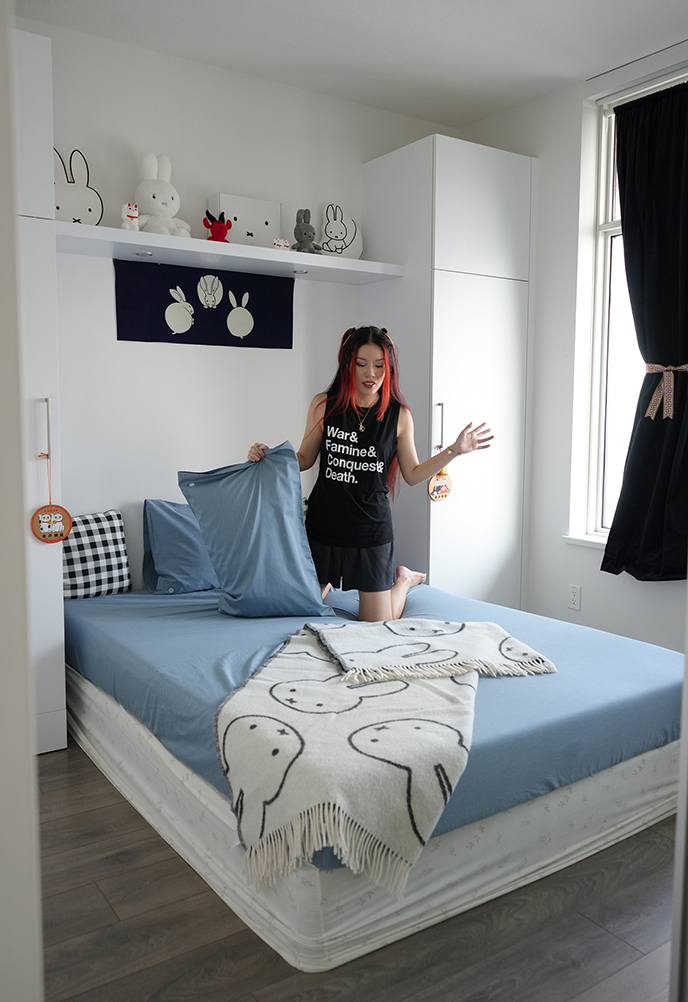
And here’s how I did my bedroom. I can lie flat all day long on my Aizome Japanese bedsheets, which are made from undyed 100% organic cotton! My mattress is also organic, by Essentia.
No microplastics to be found here: my super-soft natural bedding is sustainable, plant-dyed and toxin free. Aizome Textiles are ideal for sensitive skin and absolutely worth the investment for long-term health, especially the more we hear about the horrors of nano and microplastics (my current nemesis).
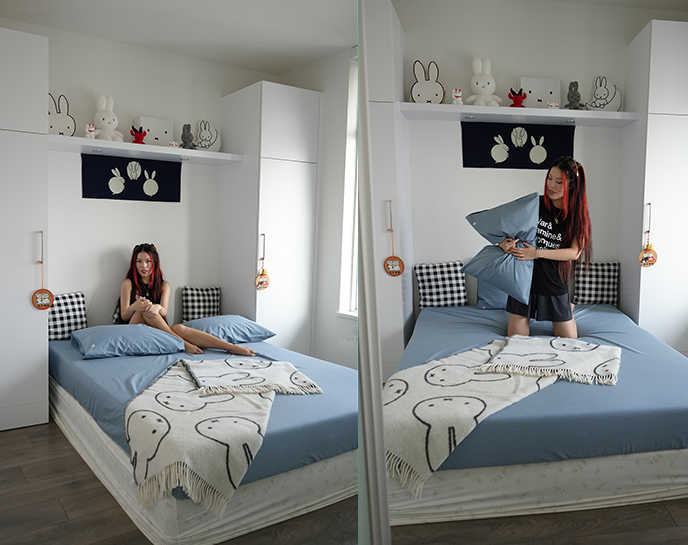
Aizome‘s organic duvet cover set in Deep Indigo goes perfectly with my shelf of Miffy and Japan temple memorabilia above me, and cat temple hanging wood wishing boards on the sides.

The pillows have 100 percent cotton gingham covers, and the Maison Deux blanket / throw is 100% New Zealand wool. How do you like the way I styled my bedroom?
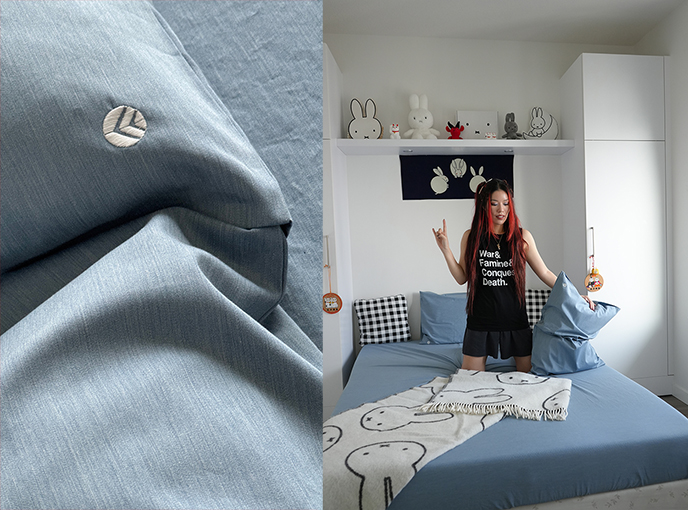
Feels so much better to be surrounded by natural fabrics. Mark my words, microplastics shall be the fifth horseman of The Collapse… I’m doing my best to reduce exposure, and switching to Aizome organic cotton bed sheets has been such a life upgrade!

Since I have a tiny apt, I had to get creative for my TV stand as traditional ones are far too large and bulky. Instead, I propped my flat screen on a Verner Panton Wire extended module with a custom glass pane on top.
Verner Panton is one my fav furniture and interior designers, famed for his futuristic and curved works from the 1960s and 70s. His Panton Wire modular system lets you arrange chrome cubes of varying sizes as shelves, storage, etc. I filled mine with architecture books, a curved candle from Mexico City, and a sardine bowl from Portugal (to hold the television remote!)

I have reminders of my global travels throughout my apartment. There are Japan coasters and a moai-shaped glass bottle from Easter Island on my Mobital Quasar table.

I got these stone-faced moai clay figures on my trip to Easter Island (see my blogs about it). They cast shadows on the windowsill next to my row of mini succulents.

All of the art in my apartment is original — no prints or posters! This powerful spirit painting is by Jón Sæmundur Auðarson, the Icelandic artist behind Dead Gallery in Reykjavik. His art often incorporates skulls and themes of death and spirituality, which is why it resonates strongly with me.

Here’s another skull / spirit / soul painting by Jón Sæmundur Auðarson, in orange and blue colors that match the hues of my apartment. I’m big on large-scale one of a kind art, and got his pieces custom framed for maximum impact. (Speaking of original art, the macrame owl is a creation by my mom in the 1970s.)

I used to have some plastic furnishings and toys around my space, but got rid of them as I’m trying to minimize exposure to microplastics. If you look closely, you can see architecture, Japan and Yoko Ono books on my Verner Panton / Montana Furniture metallic wire modular shelf.

I replaced my previous polyester rug with a kilim cotton one. The zig-zagging shapes mimic the legs of my Mobital Quasar table.
(See my IG reel about my apartment for video of everything featured.)

I styled my coffee table with plastic-free items that spark joy: a jade plant, Japanese coasters, a sardine ceramic from Portugal, and books about Robert Davidson’s British Columbia Haida art as well as minimalist architecture.

It’s impossible to feel “miffed” when you’re sitting here with this view! (See how my Mobital Quasar coffee table looks like a star or pentagram?)

More original art pieces: my dad made this aluminum brutalist sculpture of a road runner while in architecture school. It complements my hand painted talavera skull from Puebla, a witchy candle, and Karinya Botanicals dried eucalyptus leaves in a vase.

Minimalism meets Miffy and mid-century modern! It’s a balance between decorating a space and keeping it from feeling cluttered and claustrophobic. (The bunny lamp sits on a cardboard cube I got a long time ago that’s now discontinued.)

My extra large Miffy lamp (available here from Mr Maria) is a show-stopper. It comes with a dimmer so you can adjust the lighting intensity.

These Herman Miller Eames chairs pair perfectly with my round white Tavolo XZ3 table by Magis, the Italian furniture brand that makes designs by Jasper Morrison and Philippe Starck.

Get the Miffy face carpet here. It’s made of luxurious New Zealand wool by Maison Deux (again, no microplastics are being shed here!)

The sun mirror is something my family picked up in the 1990s, when the celestial whimsi-goth era was in full bloom! To make the space visually interesting, I used a variety of shapes, sizes and materials.

The metallic chair and table legs match the Panton wire shelf and stainless steel kitchen elements. In the living room, the angular wood arms and legs of the Cavett Loveseat by Crate and Barrel mimic the Mobital quasar coffeetable.

My Line Friends Brown bear lamp by Mr Maria looks over my teak wood kitchen utensils by Havenly Home. One of the simplest ways to reduce microplastics consumption is by replacing your plastic cooking tools with wood ones like these.

Havenly’s Japanese paper lamps with bamboo frames are also plastic free, and cast a peaceful glowing light after dark.

The eco-friendly teak wooden utensil set sits next to an original Vincent Castiglia skeleton drawing, and a Tom of Finland exhibition memento I got in Helsinki.

My Dutch designer friends Mr Maria are responsible for this sweet Miffy rabbit lamp, which uses fire-safe LEDs and has a dimmer. The MrMaria lighting family includes an elephant, polar bear, smiley face, Japanese doll, and other kawaii lamps.

Here’s how I combine natural light and mood lighting. Note that all my lamps double as objects of art.

This large oval paper lamp by Vin Lighting hovers above the dining table. Love the Japanese Zen meets futuristic space-y design of Vin’s 70A Akari. You can tell that the paper is a high quality, warm- hued washi — check out their site for a fetching selection of modern light fixtures.

This macrame owl perched on beachwood also looks over the room. My mom crafted it in the 70s when macrame was trending!

Pops of mid-century modern color add joy to the interiors. (See my IG reel for video of my apt decor!)

This isn’t a staged home, so there are “realness” elements like a not so aesthetic portable air conditioner and flat TV. I wanted the space to reflect my personality, and am happy with how it turned out.

It took a long time for everything to come together, as many of the furnishings are investment pieces — but they’ll last a lifetime. (Table and chairs Herman Miller, sofa Crate and Barrel, coffee table Mobital).

I also wanted to invest in original artwork to elevate the interior design. A sliver of light illuminates my spirit painting by Iceland’s Jón Sæmundur Auðarson. (Remember when I visited his Reykjavik gallery?)
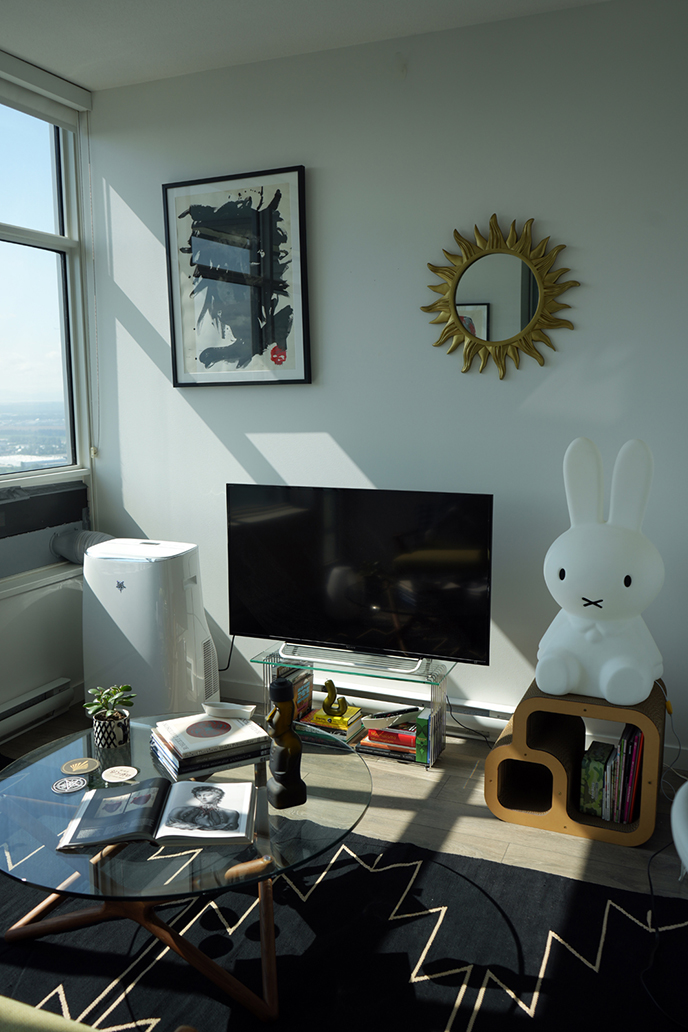
The living room hits different when the weather and time of day shifts.

An alternate angle of the space, to give a sense of how it all flows together.

The entryway has a “walk of fame” stars carpet — it’s a Papellina Viggo Metallic Stone / Vanilla Star rug.

My Mobital Quasar table glows like a star under the light. (See my showroom visit to Mobital Vancouver for more of their furniture.)

Tip for styling coffee tables: use a variety of objects in natural materials, in different heights and sizes, for visual interest. Eg: plants, books, paper coasters, ceramics, and glass bottles.

I love how my apartment decoration came together! What do you think of my revamped space, and how I styled it?
CREDITS: Havenly floor lamp and teak utensils, Vin Lighting ceiling lanterns, Mr Maria Miffy and Brown Bear lamps.
Miffy carpet and throw blanket Maison Deux
Dry eucalyptus bouquet by Karinya Botanicals
Quasar wood & glass coffee table Mobital
Goth spirit paintings Jón Sæmundur
Verner Panton wire extended module, Herman Miller Eames chairs & Magis Tavolo XZ3 dining table, Crate and Barrel Cavett sofa, art from travels (Easter Island moai, Puebla talavera skull, etc). White curved chair and sun mirror from 1990s.

You’re welcome to Pin these images on Pinterest, and share this post on social media. If you have any questions, please leave a comment and I promise to respond. Please also watch my @lacarmina Instagram reel for video footage of these interiors.
Update: my mid-century modern, tiny home interior decoration was featured in depth by Apartment Therapy and Yahoo!
Thanks for stopping by my apartment! Now tell me or show me: what does your living space look like?
 LA CARMINA


